
Double glazing
Double glazing: how it works, prices and options
Two panes of glass and an insulating gap: the minimum standard for a warm, quiet and efficient home.
Last updated: · By the Orangeries & Conservatories team
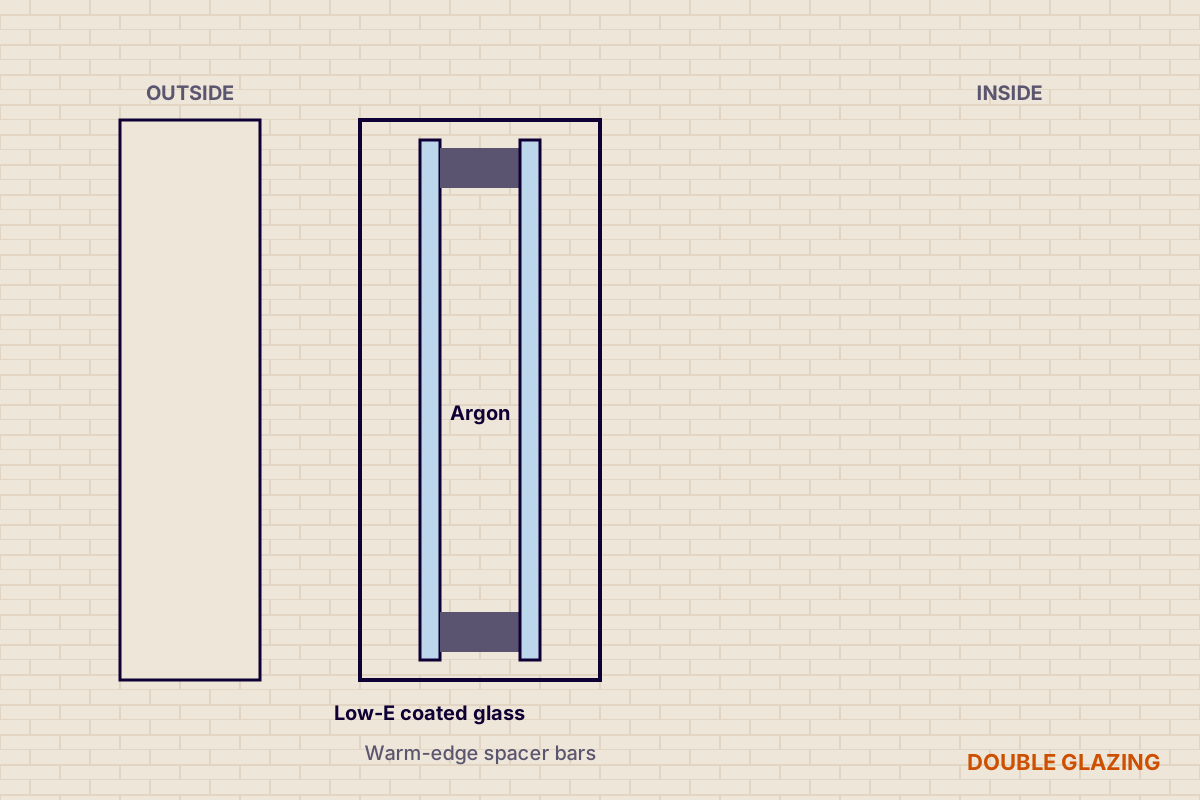
Double glazing uses two panes of glass sealed around an insulating gap, usually filled with argon gas, with a low-emissivity coating and warm-edge spacer bars. It cuts heat loss, draughts, condensation and noise. A double-glazed window typically costs about £350 to £1,400 installed, depending on frame and style.
How does double glazing work?
A double-glazed unit is made from two panes of glass held apart by a spacer bar and sealed around the edge. The gap is usually filled with argon, a dense, inert gas that slows heat transfer better than air.
The inner pane normally has a low-emissivity (low-E) coating that reflects heat back into the room while letting sunlight through. Combined with an efficient frame and good seals, modern double glazing easily meets current building rules and makes a real difference to comfort.
Key features
- Two panes with a sealed, gas-filled gap.
- Low-E coated inner pane to keep heat in.
- Warm-edge spacers to reduce cold edges and condensation.
- Options for acoustic, safety, self-cleaning and obscure glass.
- Rated by U-value and Window Energy Rating.
Is it right for you?
Best suited to
- Almost every home replacing single glazing or failed units
- Homeowners wanting lower bills and fewer draughts
- Most budgets, as it is the standard specification
- Homes near moderate road noise
Things to consider
- Triple glazing performs better on exposed or north-facing walls
- Listed buildings may need secondary glazing instead
- Misted units mean a failed seal and need replacing
- Frame quality matters as much as the glass
Glass options
- Safety glass: toughened or laminated glass is required in doors and low-level panes.
- Acoustic glass: laminated panes of different thicknesses reduce traffic noise.
- Solar-control glass: limits overheating in south-facing rooms, conservatories and orangeries.
- Self-cleaning glass: a coating helps rain wash dirt away on hard-to-reach windows.
- Obscure and decorative glass: privacy for bathrooms and front doors.
The whole window or just the glass?
"Double glazing" is used for two different things, and knowing the difference can save money.
A double-glazed window
The complete window: the frame, the opening sashes, the hinges and locks, the seals and the glass. Replace the whole window when the frame is old, warped, draughty or rotten, or when you want a new style or colour.
A sealed glass unit
Just the glass: two panes held apart by a spacer bar, filled with argon and sealed around the edge. If only the glass has misted or cracked, the sealed unit can usually be swapped on its own, for a fraction of the price of a new window.
Window energy ratings: A++ to B
Most windows sold in the UK carry a Window Energy Rating (WER) from the British Fenestration Rating Council (BFRC), shown on a rainbow label like an appliance. It balances the heat lost through the window, the free heat gained from the sun and air leakage.
| Rating | What it means |
|---|---|
| A++ and A+ | The best performers, usually triple glazing or very high-specification double glazing |
| A | Very efficient double glazing with low-E glass, argon and warm-edge spacers |
| B | The minimum for replacement windows in England if you use the energy rating route |
The alternative measure is the U-value: the lower the better. Replacement windows in England need 1.4 W/m²K or better. Aluminium windows are often quoted by U-value rather than a WER band.
How long does double glazing last?
Good-quality double glazing usually lasts 20 to 30 years, and uPVC and aluminium frames often outlast the glass. The weak point is the seal around the sealed unit: over time it can fail, letting moisture in so the glass mists between the panes.
- Signs it is time to replace: misting between the panes, draughts, condensation on the frames, sticking sashes or worn locks.
- Make it last: clean frames and drainage slots, lubricate hinges and locks once a year, and keep trickle vents open to reduce condensation.
- Guarantees: most installers guarantee frames for around 10 years and sealed units for 5 to 10 years. Check what yours covers.
Double glazing prices
The frame material and window style make the biggest difference to the price of double glazing.
| Window | Typical price, installed | Notes |
|---|---|---|
| Double-glazed window (any frame) | £350 – £1,400 | Depends on frame, style and glass |
| uPVC casement | £350 – £600 | Most affordable option |
| Whole house (semi-detached, 11 to 15 windows) | About £5,865 – £10,070 | Federation of Master Builders, uPVC |
| Replacement sealed unit only | Priced per unit | If the frame is still sound |
Per window unless stated. Prices are current indicative UK ranges from the published guides listed below. Always get a written quote.
Rules and regulations
- England and Wales: replacement windows must meet building regulations for energy, safety glass, ventilation and fire escape. In England that means a U-value of 1.4 W/m²K or a Window Energy Rating of band B or better. A FENSA or Certass installer can self-certify the work and give you a certificate.
- Scotland: replacing windows in a house of one or two storeys does not normally need a building warrant, but the windows must still meet the building standards. Flats and taller buildings may need one.
- Northern Ireland: replacement windows are controlled under the Building Regulations (Northern Ireland). Check with your council's building control service.
- Listed buildings and conservation areas: changing window style or material may need consent. Ask your council before ordering.
See the full guide to the rules for new windows and doors across the UK.
Found the right style?
Tell us what you are looking for and we will recommend the right design, frame and glass for your home. Our survey and quote are free, with no obligation.
Related guides
Common questions
How much does double glazing cost?
A double-glazed window typically costs about £350 to £1,400 installed. uPVC casements are cheapest, at around £350 to £600.
Why are my double-glazed windows misting up between the panes?
Misting between the panes means the seal has failed and moisture has got in. The sealed unit can usually be replaced without changing the frame.
Is double glazing enough, or do I need triple glazing?
Good double glazing with a low-E coating is enough for most homes. Triple glazing is most worthwhile on exposed, north-facing or noisy elevations.
How long does double glazing last?
Usually 20 to 30 years. The frames often last longer than the sealed glass units, which can be replaced on their own if the seal fails.
What is the difference between a double-glazed window and a sealed unit?
The window is the whole thing: frame, sashes, locks and glass. The sealed unit is just the glass, two panes with a sealed gap between them. A failed sealed unit can be replaced without changing the window.
What do window energy ratings mean?
Window Energy Ratings run from A++ to lower bands and show how well a window keeps heat in overall. In England, replacement windows need a rating of B or better, or a U-value of 1.4 W/m²K or lower.
How does double glazing reduce heat loss?
The sealed gap of argon between two panes slows heat escaping, a low-emissivity coating reflects heat back into the room, and a warm-edge spacer reduces cold around the edge of the glass.
Does double glazing reduce noise?
Yes, it reduces noise compared with single glazing. Acoustic laminated glass gives a further improvement near busy roads.
If we have not answered your question here, please feel free to view our full FAQs or contact us directly.
Ready to plan your new room?
Get a ballpark price in under a minute with our estimator, or send us your project details for a free quote.