
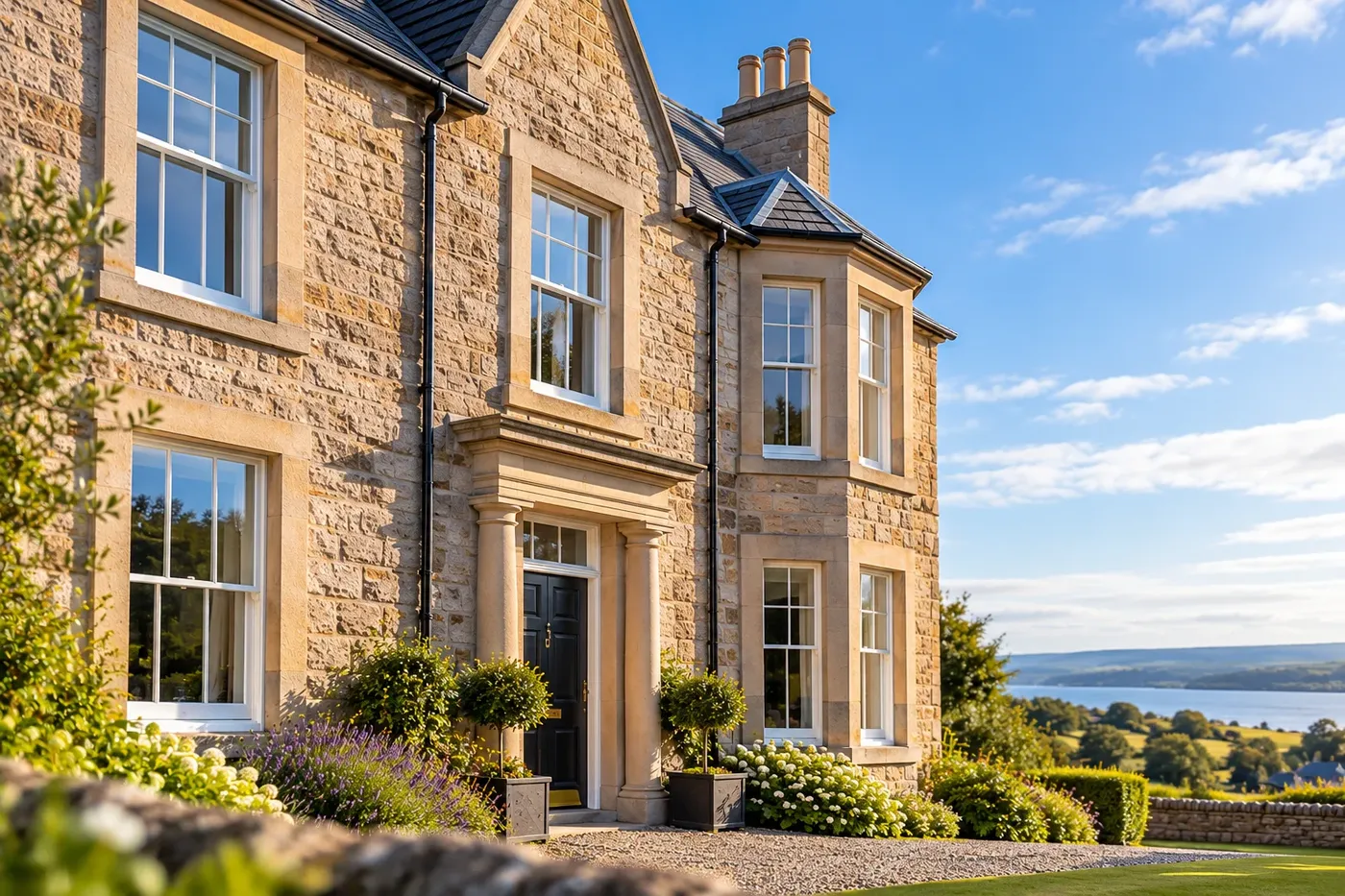
Sash window renovation
Sash & case window renovation
Bring original sash windows back to life. Repair, draught-proof and re-glaze them to keep the character of your home while making it warmer and quieter.
Last updated: · By the Orangeries & Conservatories team
Sash window renovation repairs original timber sash and case windows instead of replacing them: freeing painted-shut sashes, replacing cords, repairing rot, draught proofing and repainting. It keeps period character, suits listed homes and typically costs about £300 to £550 per window for draught proofing and new cords, or £500 to £1,200 for full refurbishment.
What does sash window renovation involve?
Original sash and case windows are one of the most important features of a period home, but many have been painted shut, rattle in the wind or let in cold draughts. Rotten sills, broken cords and poor ventilation are common, and a window that will not open can also block a fire escape route.
Renovation tackles these problems while keeping the original timber and glass. The sashes are removed, loose paint is taken back, timber is repaired, new cords are fitted to the weights and pulleys are serviced. Brush or pile draught proofing is fitted around each sash, and the windows are repainted and rebalanced so they slide easily.
Key features
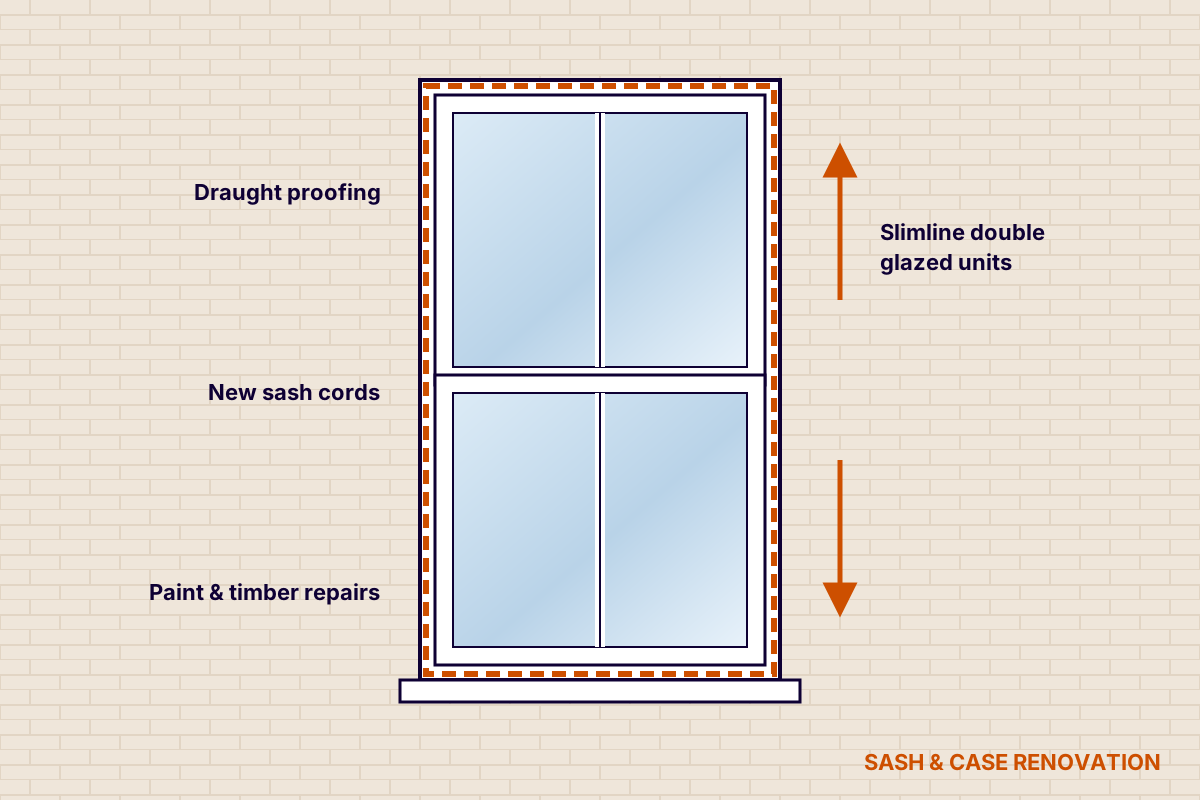
- Easing and freeing sashes that are painted or swollen shut.
- New sash cords and serviced pulleys and weights.
- Draught proofing with brush or pile seals around every sash.
- Timber splice repairs to sills, rails and beads, then repainting.
- Optional slimline double-glazed units fitted into the existing sashes, where permitted.
Is it right for you?
Best suited to
- Listed buildings and conservation areas
- Original windows that are structurally sound
- Homeowners who value period character
- Draughty, rattling or stuck sashes
Things to consider
- Badly rotten windows may cost more to repair than replace
- Slim double glazing in listed buildings needs consent
- Timber still needs repainting every few years
- Secondary glazing may be needed for heavy traffic noise
Renovation options
Draught proofing only is the quickest improvement and makes a big difference to comfort. Draught proofing plus new cords restores smooth, balanced operation. Full refurbishment adds timber repairs and redecoration. For extra warmth and quiet, add secondary glazing inside, or slim double-glazed units in the sashes where your planning authority allows them.
A short history of sash and case windows
Sliding sash windows appeared in England in the 1670s, and the invention is sometimes credited to the scientist and architect Robert Hooke. The earliest sashes had no counterweights and were held open with a wooden peg. Weights, cords and pulleys hidden in a box frame, or case, soon followed, which is why the window is still called a sash and case in Scotland.
Georgian builders favoured six-over-six sashes with very fine glazing bars. As larger panes of glass became affordable in the Victorian period, two-over-two and one-over-one patterns took over, and thousands of Victorian and Edwardian terraces and villas were built with standard sash units. Many of those original windows are still working today, which is why repair is so often worth considering.
Signs your sash windows need attention
- Sashes rattle in the wind or let in cold draughts around the edges.
- Sashes are painted shut, swollen or will not stay open.
- Broken or frayed cords, or a sash that drops when you let go.
- Soft or rotten timber, usually in the sill and the bottom rail of the lower sash.
- Flaking paint, cracked or missing putty, or loose glass.
- Heavy condensation and mould on the glass and frame in winter.
Most of these can be fixed without replacing the window. Push a screwdriver into the sill: if it goes in easily in only a few spots, splice repairs will usually do. If the whole sill and frame are soft, replacement may be better value.
What happens during a sash renovation
- Survey: each window is checked for rot, cords, glass and how it runs, and you get a price per window.
- Sashes out: the beads are removed and the sashes lifted out. Work is usually done on site, with the opening protected while the sashes are out.
- Repairs: loose paint is removed safely, rotten timber is cut out and spliced with new seasoned timber, and loose glass is re-puttied. Resin is fine for small defects, but timber splices are the conservation-standard repair for larger areas.
- Running gear: new cords are fitted, pulleys are freed and weights are rebalanced, so each sash stays where you leave it.
- Draught proofing: new parting beads and staff beads with seals are fitted around the sashes, plus a seal at the meeting rails. Ask what type: paint-resistant rubber or silicone seals usually outlast simple brush strips, which can clog with paint over time.
- Finish: sash locks and stops are fitted if needed, and the windows are primed and painted.
Draught proofing and new cords usually take about half a day to a day per window. Full refurbishment with timber repairs takes longer, and some joiners take sashes back to the workshop, boarding the opening securely in the meantime.
Renovate, re-glaze or replace?
| Option | Warmth and quiet | Keeps original windows | Typical cost per window |
|---|---|---|---|
| Draught proofing and new cords | Much better, draughts and rattles gone | Yes | £300 – £550 |
| Renovation plus secondary glazing | Close to modern double glazing, very quiet | Yes, and usually acceptable on listed buildings | About £700 – £1,450 |
| Renovation plus slim double-glazed units | Good, with original-looking sashes | Frames yes, glass replaced | Varies with the number of panes |
| New timber sash windows | Best overall | No | £1,500 – £2,000 |
For most period homes, renovating and draught proofing first, then adding secondary glazing in the coldest or noisiest rooms, gives the best balance of comfort, cost and character.
Slim double glazing and vacuum glazing
Original sashes are too thin for standard double-glazed units, which are usually 24 to 28 mm thick. Slim double glazing (about 10 to 14 mm) and vacuum glazing (about 6 to 9 mm) are made to fit existing rebates, sometimes with small changes to the timber, and can cut heat loss through the glass by more than half compared with single glazing.
Where the original glass is historic, such as crown or cylinder glass with its gentle ripples, it is often worth keeping. On a listed building you will need consent to change the glass. Some councils now accept slim or vacuum glazing where the existing glass is not original, but the rules vary, so check with your conservation officer before ordering.
Each nation has its own heritage body with guidance on traditional windows: Historic England, Historic Environment Scotland, Cadw in Wales and the Historic Environment Division in Northern Ireland. Their advice generally favours repair, draught proofing and secondary glazing before replacement.
Choosing a sash window specialist
Sash renovation is skilled joinery, not standard window fitting. Before you choose a company, check that:
- the person who surveys your windows is an experienced joiner who will see the hidden problems, not just a salesperson
- you get a fixed price per window in writing, with the work for each window listed
- they repair in timber where possible and can make an exact copy of a sash or a whole window when one is beyond repair
- they have worked on listed buildings and know your local conservation rules
- they use lead-safe paint removal and clean up properly
- they guarantee both the workmanship and the draught seals, and can show you recent work nearby
Timber casement windows can usually be repaired and draught-proofed in the same way, so ask about any other original windows at the same visit.
Safety, security and looking after your sashes
- Lead paint: windows painted before about 1970 often have lead paint underneath. It should never be dry-sanded or burned off; a good joiner will use wet methods, chemical strippers or controlled heat and clean up safely.
- Security: fit two key-locking sash fasteners on wider windows, and sash stops so the window can be left open a little for air but not far enough to climb through.
- Child safety: restrictors or stops on upstairs windows with low sills.
- Upkeep: repaint the outside every 5 to 8 years, touch up the sills sooner, and rub a little candle wax on the runners if a sash starts to stick. Never paint the sash cords or the draught seals.
Sash window renovation prices
Renovation is priced per window and depends on the condition of the timber and how much work is needed.
| Work | Typical price per window | Notes |
|---|---|---|
| Draught proofing | £200 – £400 | Brush or pile seals around the sashes |
| Sash cord and weight replacement | £150 – £300 | Restores smooth, balanced sliding |
| Draught proofing plus new cords | £300 – £550 | The most popular package |
| Full refurbishment | £500 – £1,200 | Includes timber repairs and decoration |
| Secondary glazing | £400 – £900 | Added inside the existing window |
| Whole house (8–12 windows) | £4,000 – £12,000 | Depends on condition and scope |
Per window unless stated. Prices are current indicative UK ranges from the published guides listed below. Always get a written quote.
Rules and regulations
- Like-for-like repairs to original windows do not normally need building regulations approval or a building warrant.
- Listed buildings need listed building consent for changes that affect character, including new glass and double-glazed units. Repairs using matching materials are often acceptable, but check first.
- Conservation areas: many councils publish guidance on acceptable glazing and repairs. Some, such as Edinburgh, have specific guidance for sash windows.
- Fire escape: renovation should leave upstairs escape windows able to open fully.
See the full guide to the rules for new windows and doors across the UK.
Found the right style?
Tell us what you are looking for and we will recommend the right design, frame and glass for your home. Our survey and quote are free, with no obligation.
Related guides
Sliding sash windows
Vertical sliding sashes for Georgian, Victorian and Edwardian homes.
Read the guideGlazing optionsSecondary glazing
An extra inner pane for listed homes and noisy roads.
Read the guideGlazing optionsDouble glazing
The UK standard for warmth, quiet and lower bills.
Read the guideCommon questions
Is it better to repair or replace sash windows?
If the timber is mostly sound, repair is usually better value and keeps the original character. Replacement makes sense when the frames are badly rotten or the windows have been poorly altered.
How much does sash window draught proofing cost?
Draught proofing typically costs about £200 to £400 per window, or around £300 to £550 with new cords.
Can I put double glazing in my existing sash windows?
Often, using slimline double-glazed units fitted into the existing sashes. Listed buildings need consent, and some conservation areas have specific rules.
Does draught proofing reduce noise?
Yes, it reduces noise noticeably by sealing gaps. For heavy traffic noise, secondary glazing is more effective.
How long does sash window renovation take?
Draught proofing and new cords usually take half a day to a day per window. Full refurbishment with timber repairs takes longer, so a whole house may take one to two weeks.
Can painted-shut sash windows be freed?
Yes. The paint seal is cut, the beads are eased off and the sashes are removed, cleaned and refitted so they slide freely again. This is often done as part of draught proofing.
Will renovated sash windows be as warm as new ones?
Draught proofing alone removes most of the heat lost through gaps. Adding secondary glazing or slim double glazing brings renovated sashes close to modern double glazing for warmth and noise.
Is it safe to strip old paint from sash windows?
Paint applied before about 1970 may contain lead, so it should not be dry-sanded or burned off. Use a joiner who removes it with safe wet or chemical methods and cleans up properly.
How often should sash windows be repainted?
The outside usually needs repainting every 5 to 8 years, and sooner on south-facing or exposed walls. Regular painting is the best way to stop rot in the sills and bottom rails.
Can sash windows be made more secure?
Yes. Key-locking sash fasteners, sash stops and laminated glass all improve security without changing the look of the window.
Which draught proofing seals are best for sash windows?
Seals set into new parting beads and staff beads work best. Paint-resistant rubber or silicone seals usually last longer than simple brush strips, which can lose their effect if they get painted.
Can a rotten sash window be copied exactly?
Yes. A good joiner can make a new sash, or a whole new window, as an exact copy of the original, matching the mouldings, glazing bars and horns, often with slim double glazing.
Where did sash windows come from?
Sliding sash windows were first used in England in the 1670s and became the standard window of Georgian, Victorian and Edwardian homes. In Scotland they are called sash and case windows, after the box frame that hides the weights.
If we have not answered your question here, please feel free to view our full FAQs or contact us directly.
Ready to plan your new room?
Get a ballpark price in under a minute with our estimator, or send us your project details for a free quote.