
Orangeries & conservatories, beautifully planned for your home
Expert, independent guidance on orangeries and conservatories across the UK, covering styles, frames, roofs, prices and planning rules, plus free, no-obligation quotes for your project.
- Free, no-obligation quotes
- UK prices
- Planning advice
Everything for a brighter home
From a simple lean-to to a full kitchen orangery, and the windows and doors to match.
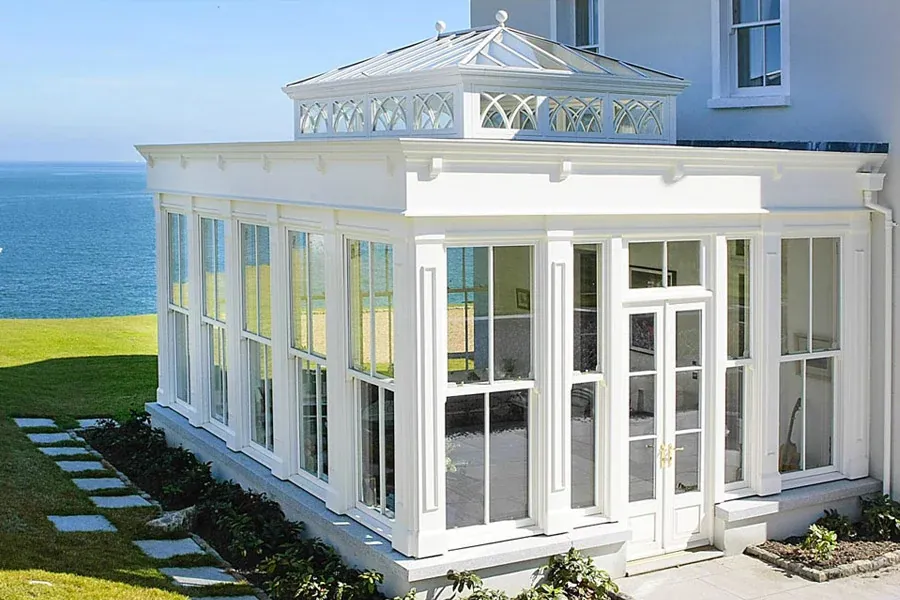
An orangery you'll use all year round
Brick piers, tall glazing and a lantern roof that pours light into the middle of the room. An orangery feels like part of the house, perfect for kitchen-diners and family living.
- Insulated perimeter roof with glazed lantern
- Piers matched to your brick, stone or render
- Bi-fold, French or sliding doors to the garden
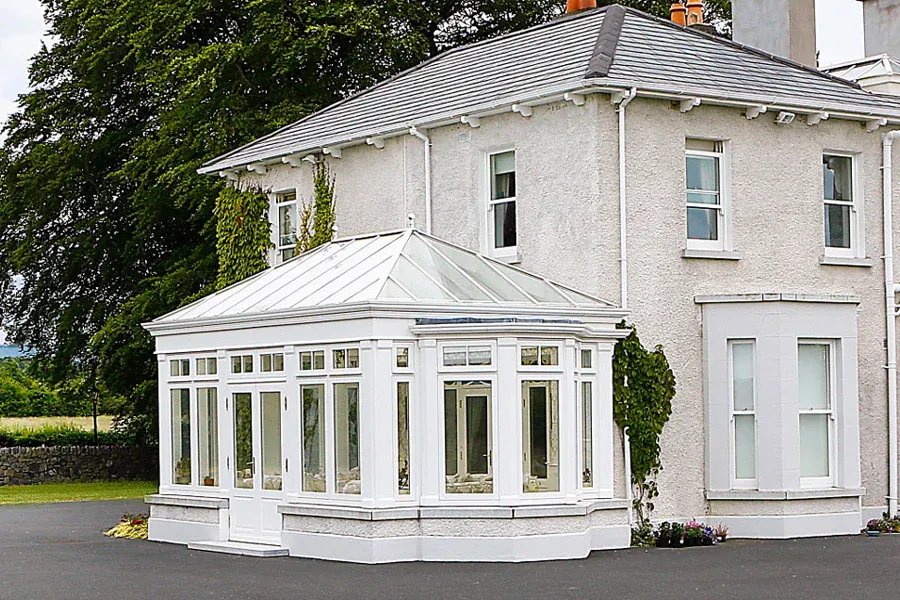
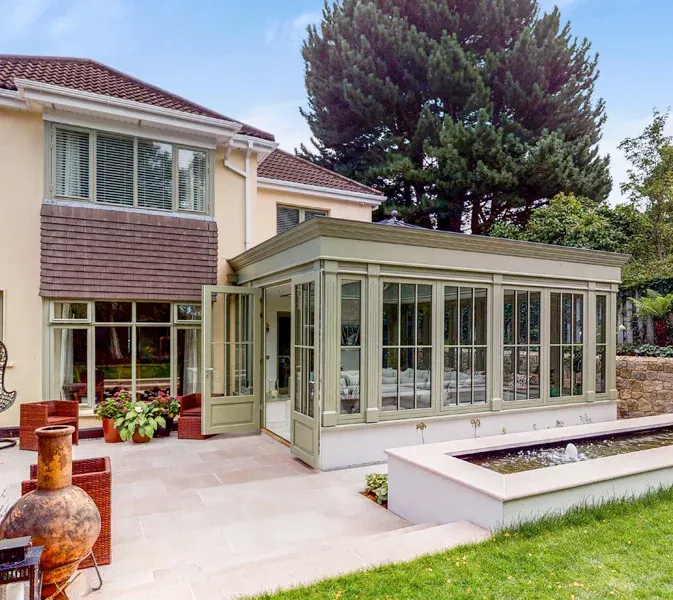
Classic conservatories, made modern
Victorian, Edwardian, gable-end, lean-to or modern glass-to-ground designs, today's conservatories use high-performance glass, slim frames and smart ventilation to stay comfortable through the seasons.
- uPVC, aluminium or timber frames
- Solar-control and self-cleaning glass
- Styles for cottages, terraces and period homes
What's the difference? Orangeries vs conservatories
Both add a bright room to your home. The main difference is how much of it is glass. A conservatory is mostly glazed, while an orangery is mostly solid with large windows and a roof lantern.
| Conservatory | Orangery | |
|---|---|---|
| Walls | Mostly glass, on a low brick or stone dwarf wall | Mostly solid, with brick, stone or rendered piers between tall windows |
| Roof | A fully glazed roof, or a solid tiled roof as an upgrade | A flat insulated roof around a glazed roof lantern |
| Inside | Light and airy, with sky views from every angle | Feels like part of the house, with a plastered ceiling and downlights |
| Comfort all year | Good with solar-control glass and ventilation; a tiled roof helps more | Easier to keep warm in winter and cool in summer |
| Typical price today | About £6,500 to £45,000 fitted | About £20,000 to £55,000 fitted |
| Building regulations | Usually exempt under 30 m² if separated from the house by external doors | Usually needs building regulations approval |
| Best for | Garden rooms, sun rooms and lighter budgets | Kitchen-diners, family rooms and open-plan living |
Choose a conservatory if
you want the most light and garden views for your budget, a room for relaxing or growing plants, and a quicker, simpler build. See our conservatory styles.
Choose an orangery if
you want a room that feels like a true extension of the house, such as a kitchen-diner or family room, that is comfortable in every season. See our orangery designs.
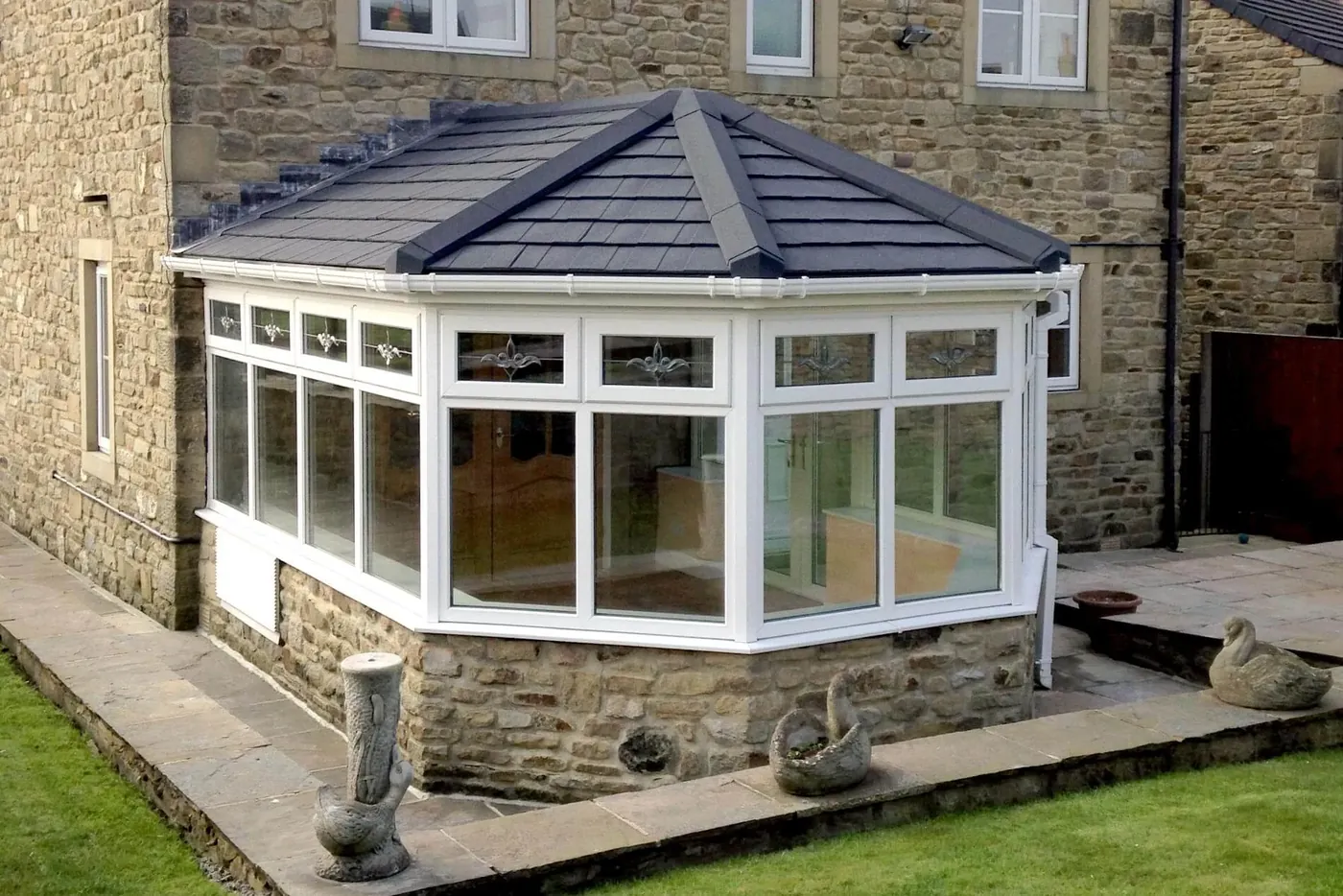
Conservatory too hot in summer, too cold in winter?
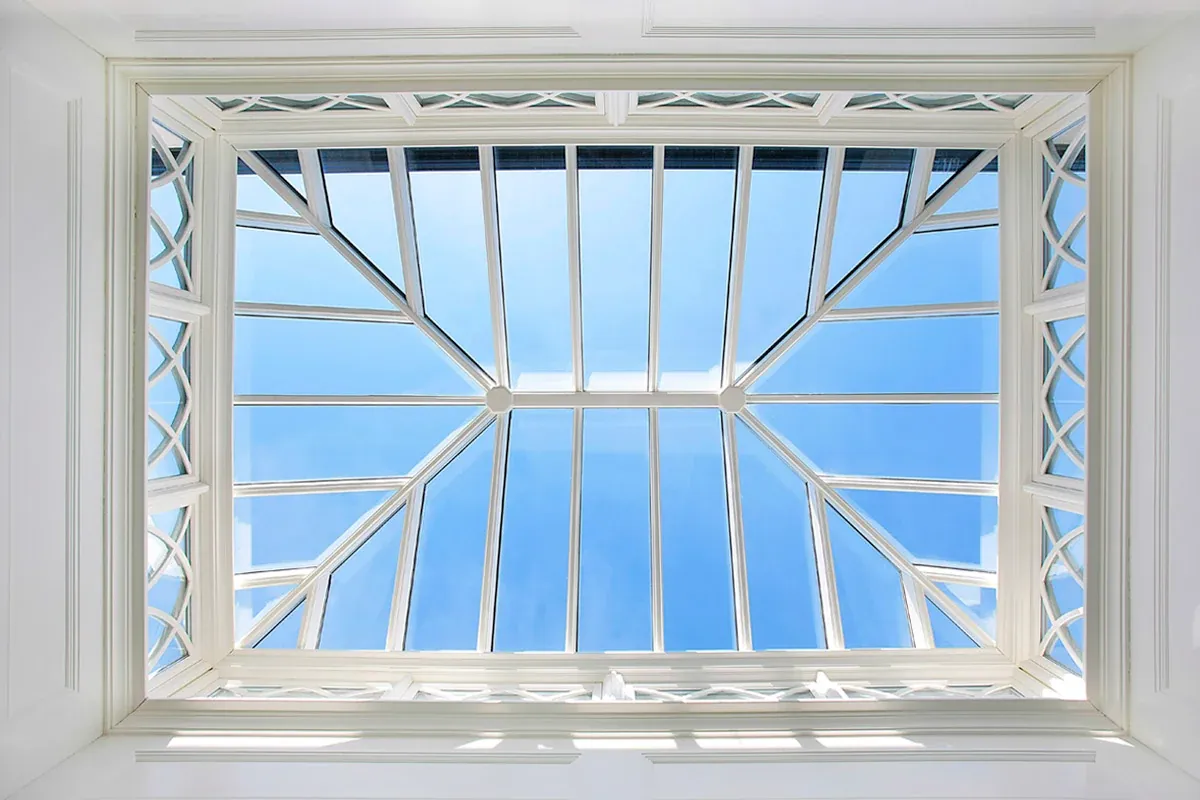
Replace a tired polycarbonate or glass roof with an insulated tiled roof and plastered ceiling. It's the quickest way to turn an under-used conservatory into a proper living space.
- Lightweight insulated tiled roof
- Plastered ceiling with downlights
- Optional rooflights or glazed panels
Replacement windows and doors to match
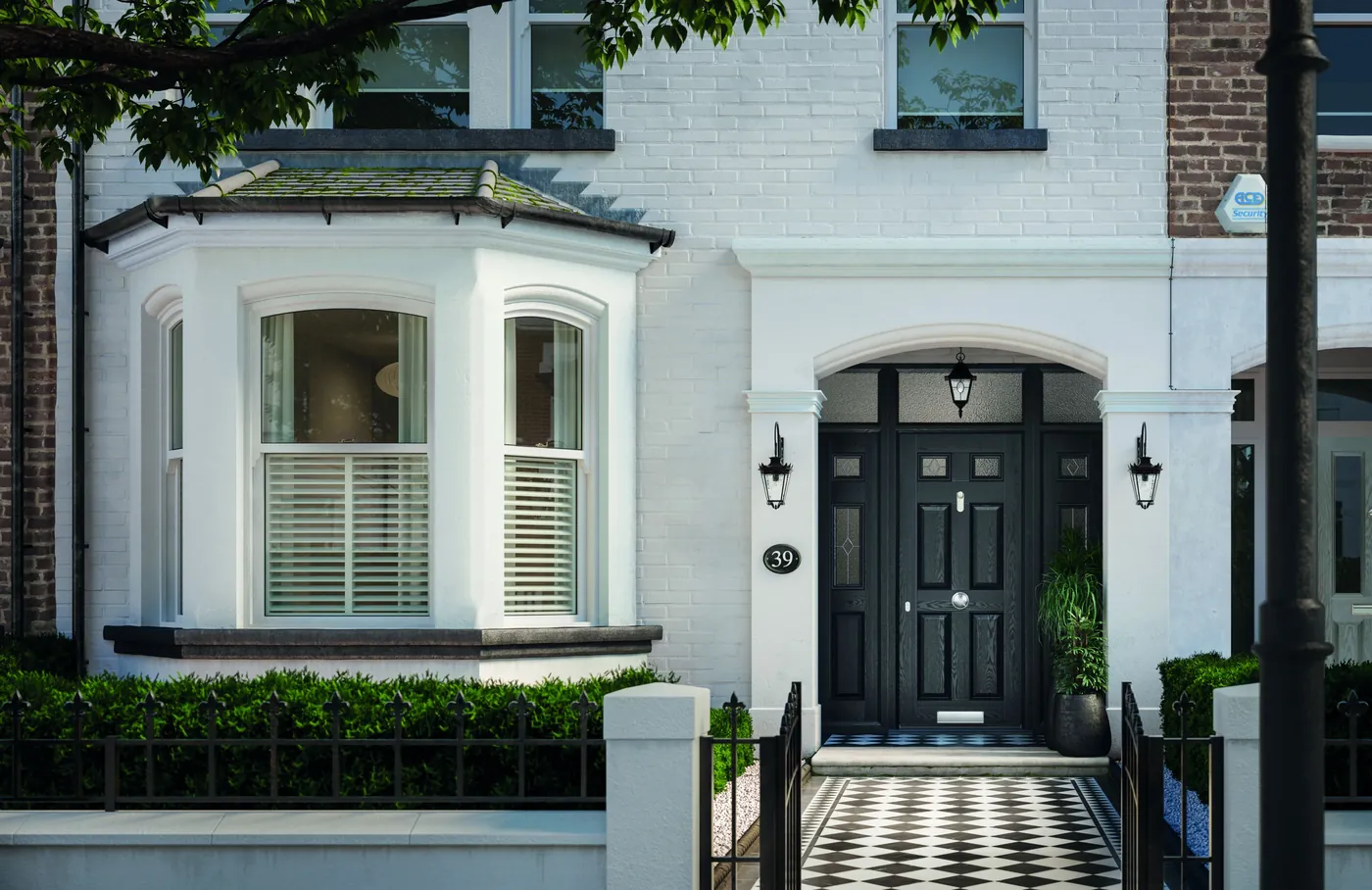
Energy-efficient casement, sash and tilt & turn windows, plus new doors from composite front doors to bi-folds, in finishes that suit your home.
- Meets current U-value rules (1.4 W/m²K)
- FENSA and Certass certificates explained
- Woodgrain, grey, green and more
From first idea to finished room
A clear, simple path from first idea to a room you'll love.
Tell us your plans
Share your ideas, rough size and budget, online or by phone.
Design & quote
Get drawings and a clear, itemised quote, with no pressure.
Permissions
Check planning and building regulations before work starts.
Build
Base, frame, roof and glazing, typically one to ten weeks.
Enjoy
Keep your certificates and guarantees safe for when you sell.
Find a style you'll love
Comfortable in January and July
The UK climate is the biggest test of any glazed room. The right glass, roof, ventilation and heating make the difference between a room you use every day and one you avoid.
- Solar-control, low-E glass or an insulated solid roof
- Roof vents, trickle vents and blinds to stop overheating
- Independent heating such as underfloor heating
- Marine-grade finishes and stainless fittings for homes near the coast
What our customers say
Add a genuine customer review here: what they had built, and how they found the experience.Customer nameTown
Add a genuine customer review here: what they had built, and how they found the experience.Customer nameTown
Add a genuine customer review here: what they had built, and how they found the experience.Customer nameTown
Placeholder: replace with real customer reviews, or embed your Google reviews.
Common questions
What is the difference between a conservatory and an orangery?
A conservatory is mostly glass, with glazed walls on a low brick base and a glass or polycarbonate roof. An orangery is mostly brick, with large windows and a flat roof around a glazed roof lantern, so it feels like part of the house and is easier to keep warm.
What are the pros and cons of an orangery and a conservatory?
Conservatory pros: the most light and garden views for your money, a lower price (from about £6,500 fitted), a quicker build, and usually no need for building regulations approval if it is under 30 m² and separated from the house by external doors.
Conservatory cons: with a fully glazed roof it can get hot in summer and cold in winter, it can feel less private, and glare can make it harder to use as a TV room or office. Solar-control glass, blinds or an insulated tiled roof help a lot.
Orangery pros: it feels like a true part of the house, the solid walls and insulated roof keep it comfortable all year, the plastered ceiling allows downlights and speakers, and it suits kitchen-diners and family rooms. It can also add more value to your home.
Orangery cons: it costs more (usually £20,000 to £55,000), takes longer to build, normally needs building regulations approval, and lets in less light than a conservatory of the same size. See the comparison table or our full guide.
How much does a conservatory or orangery cost?
Most UK conservatories cost roughly £8,000 to £40,000 fitted, with a typical uPVC build around £15,000. Orangeries usually cost £20,000 to £55,000 or more, and an average 16 m² orangery is about £32,500. Try our cost estimator.
Do I need planning permission for a conservatory or orangery?
Usually not, if your house still has permitted development rights and the design stays within the limits, for example 3 m deep on a semi or terrace, 4 m on a detached house, and no more than 4 m high. Flats, listed buildings and designated areas are different. See our planning guide.
If we have not answered your question here, please feel free to view our full FAQs or contact us directly.
Plan with confidence
Conservatory price guide
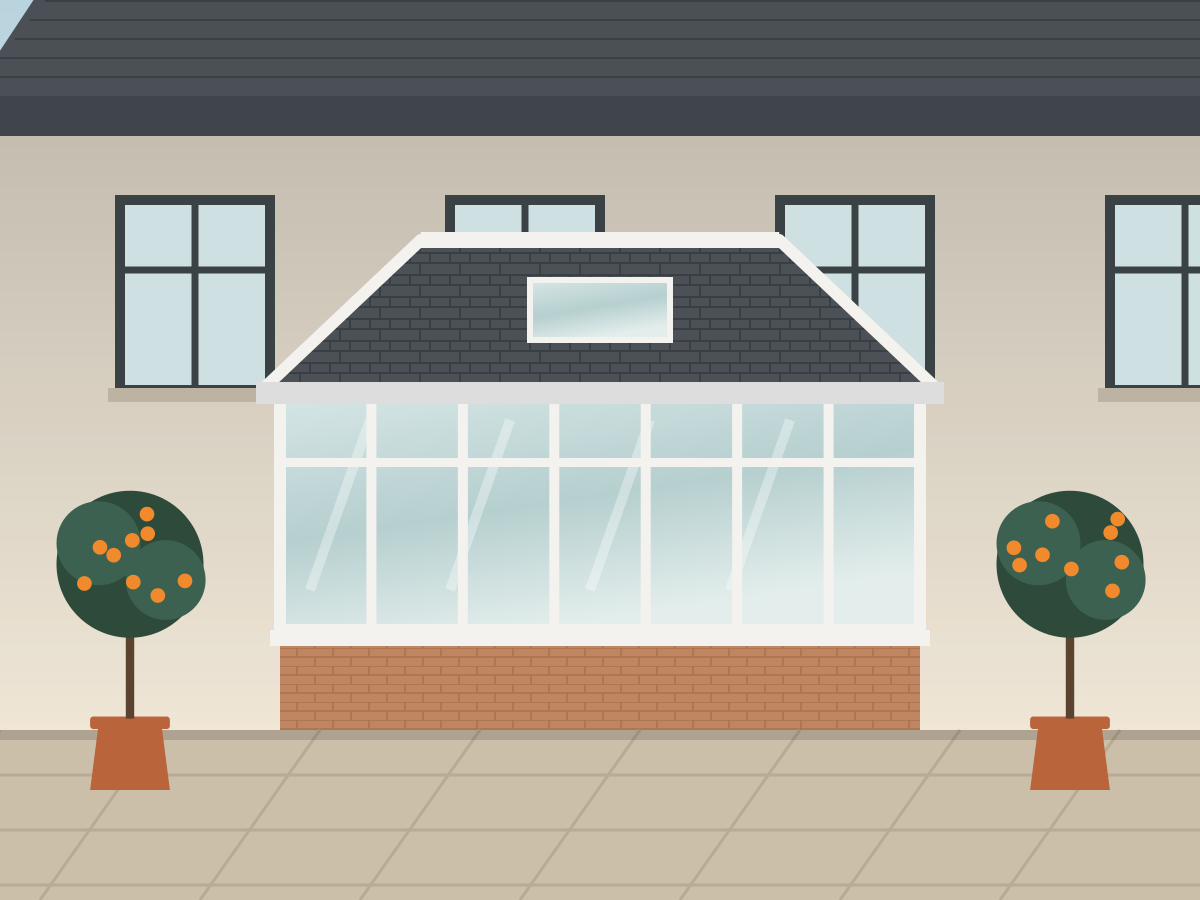
What a conservatory or orangery really costs, by size and material.
Read guide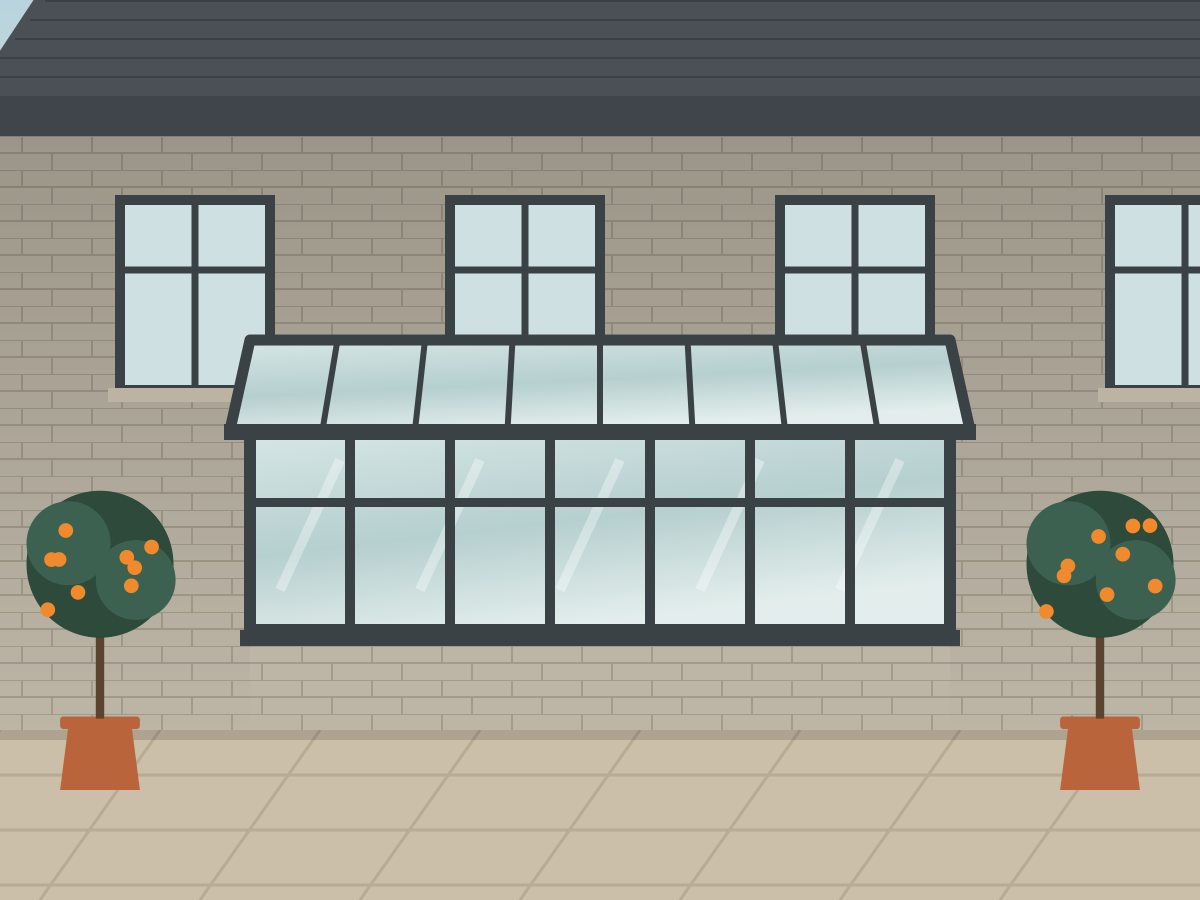
Do I need planning permission?
Permitted development limits and building regs, explained simply.
Read guide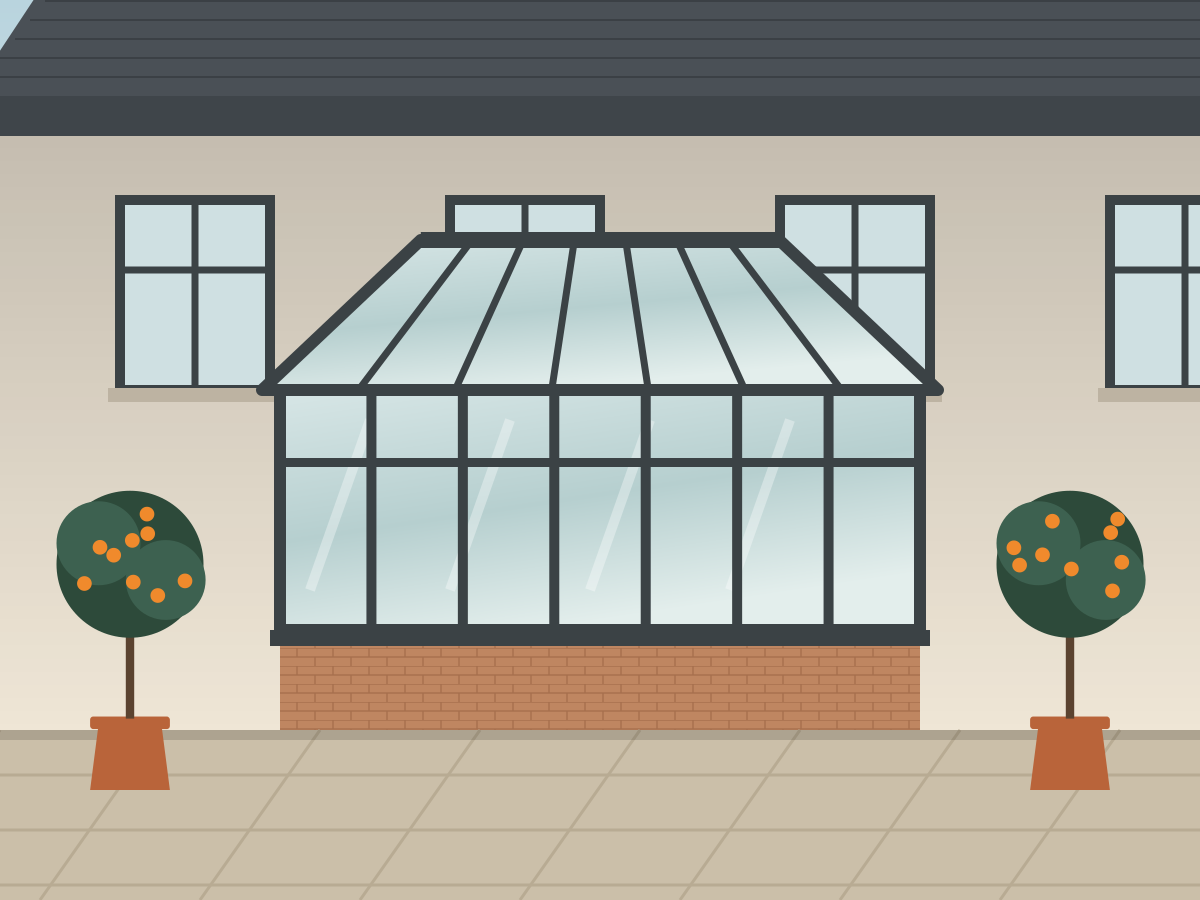
Conservatory or orangery?
Light, comfort, cost and build time side by side.
Read guide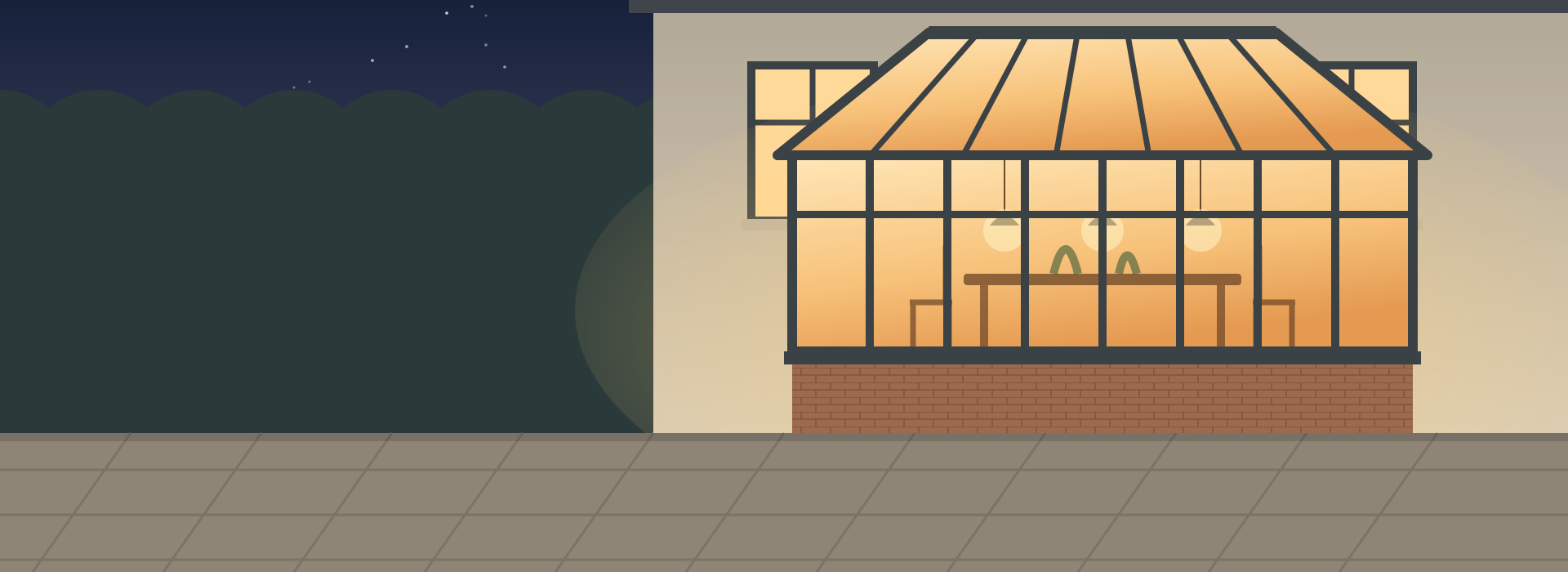
Ready to plan your new room?
Get a ballpark price in under a minute with our estimator, or send us your project details for a free quote.