
Secondary glazing
Secondary glazing: how it works, prices and options
An independent inner window that keeps your original windows intact while cutting draughts, heat loss and noise.
Last updated: · By the Orangeries & Conservatories team
Secondary glazing is an independent pane or slim window fitted inside your existing window. It keeps original windows intact, which makes it the usual choice for listed buildings and conservation areas, and is very effective against noise. It typically costs about £180 to £400 per window installed.
What is secondary glazing?
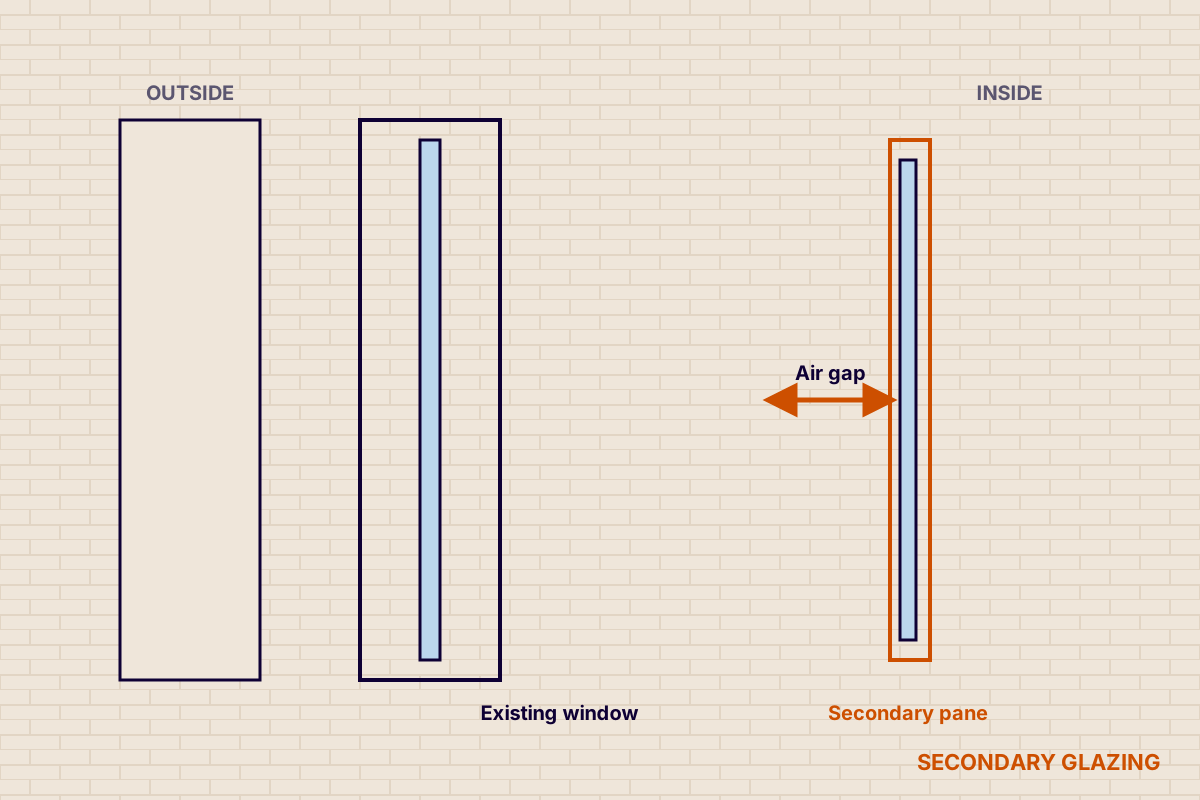
Secondary glazing is a slim, discreet second window fitted on the room side of an existing window. The air gap between the two panes acts as insulation, cutting draughts and heat loss, while a wider gap and laminated glass make it one of the most effective ways to reduce noise.
Because the original window is left untouched, secondary glazing is usually acceptable on listed buildings and in conservation areas, where replacing windows may not be allowed. It also suits rented and leasehold homes where external changes are restricted.
Key features
- Fitted inside the existing window; the outside is unchanged.
- Lift-out, hinged, horizontal or vertical sliding panels.
- Excellent noise reduction, especially with acoustic glass and a wide gap.
- Cuts draughts and heat loss from single-glazed windows.
- Slim aluminium frames finished to blend with the room.
Is it right for you?
Best suited to
- Listed buildings and conservation areas
- Homes near busy roads, railways or flight paths
- Original sash and case windows worth keeping
- Flats and rented homes where windows cannot be replaced
Things to consider
- Two windows to open for ventilation and cleaning
- Less effective than new double glazing at stopping heat loss
- Needs a reasonable reveal depth to fit
- Listed buildings may still need consent for fixings
Types of secondary glazing
- Lift-out panels: the most affordable; ideal for windows you rarely open.
- Hinged: open like a casement, for easy access.
- Horizontal sliding: suits wide windows.
- Vertical sliding: lines up with sash window meeting rails, so it is almost invisible from outside.
Pair secondary glazing with draught proofing and sash renovation for the best results on period windows.
Secondary glazing prices
Secondary glazing is usually cheaper than replacing the window, and priced by size and opening type.
| Type | Typical price per window, installed | Notes |
|---|---|---|
| Secondary glazing (typical) | £180 – £400 | Depends on size and opening type |
| Lift-out panels | £180 – £250 | Most affordable |
| Whole house | £2,750 – £6,150 | Average around £3,000 |
Acoustic glass and bespoke shapes cost more. Prices are current indicative UK ranges from the published guides listed below. Always get a written quote.
Rules and regulations
- No planning permission is normally needed, because the outside of the building is unchanged.
- Listed buildings: secondary glazing is often the preferred solution, but listed building consent may still be needed for fixings. Check with your council's conservation officer.
- Escape routes: secondary glazing on escape windows must open fully, so choose hinged or sliding types there.
See the full guide to the rules for new windows and doors across the UK.
Found the right style?
Tell us what you are looking for and we will recommend the right design, frame and glass for your home. Our survey and quote are free, with no obligation.
Related guides
Sash window renovation
Repair, draught-proof and re-glaze original sash windows.
Read the guideWindow stylesSliding sash windows
Vertical sliding sashes for Georgian, Victorian and Edwardian homes.
Read the guideGlazing optionsDouble glazing
The UK standard for warmth, quiet and lower bills.
Read the guideCommon questions
How much does secondary glazing cost?
Secondary glazing typically costs about £180 to £400 per window installed, with a whole house averaging around £3,000.
Is secondary glazing allowed on listed buildings?
It is usually the preferred option because the original windows are kept. Listed building consent may still be needed for fixings, so check with your council.
Is secondary glazing good for noise?
Yes. With a wide air gap and acoustic laminated glass, it is one of the most effective ways to reduce traffic noise.
Is secondary glazing as good as double glazing?
It reduces heat loss significantly, but new double glazing usually performs better thermally. Secondary glazing is often better for noise.
If we have not answered your question here, please feel free to view our full FAQs or contact us directly.
Ready to plan your new room?
Get a ballpark price in under a minute with our estimator, or send us your project details for a free quote.