
Types of windows
Types of windows: a guide by period
Georgian, Victorian, Edwardian, 1930s or modern? Choosing windows that suit the age and style of your home.
Last updated: · By the Orangeries & Conservatories team
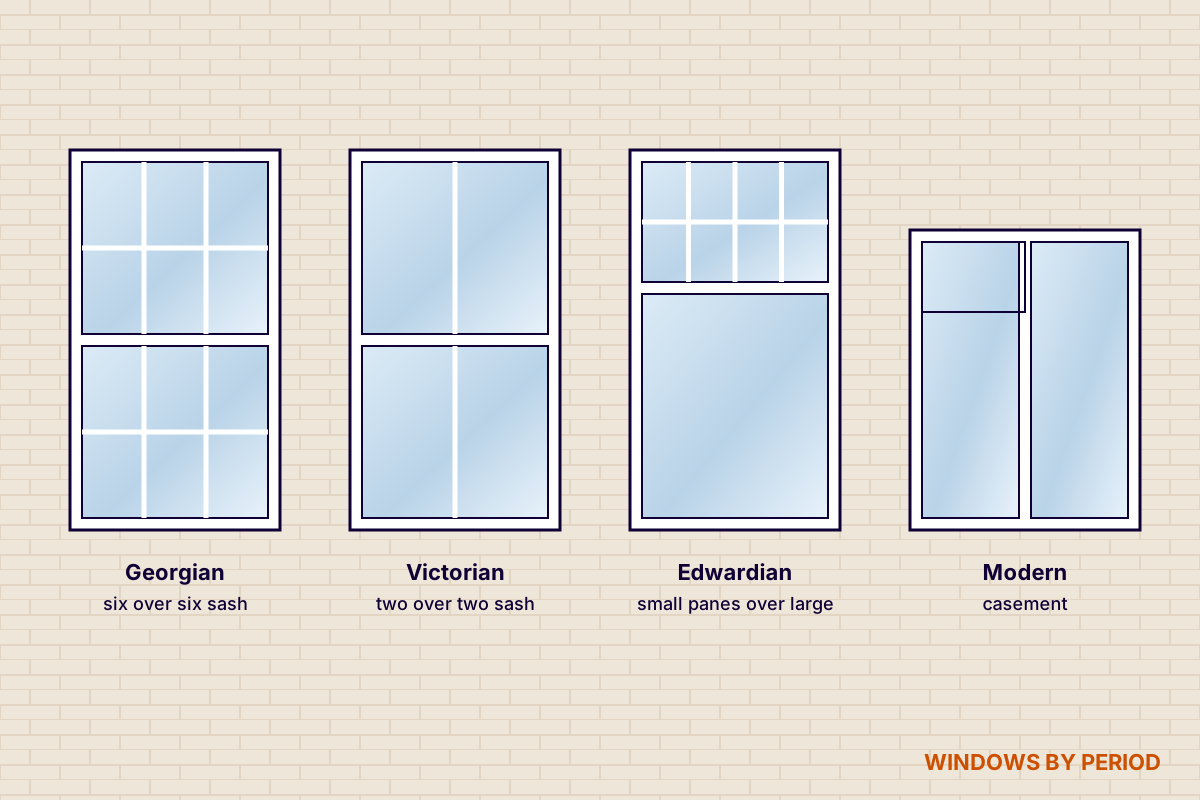
The right type of window depends on the age of your home. Georgian houses suit multi-pane sash windows, Victorian houses two-over-two sashes and bays, Edwardian homes small panes over large, 1930s homes bays and leaded casements, and modern homes casement or tilt and turn windows.
Window styles through the ages
- Georgian (1714 to 1837): tall sliding sash windows divided into small panes, typically six over six, because large sheets of glass were hard to make.
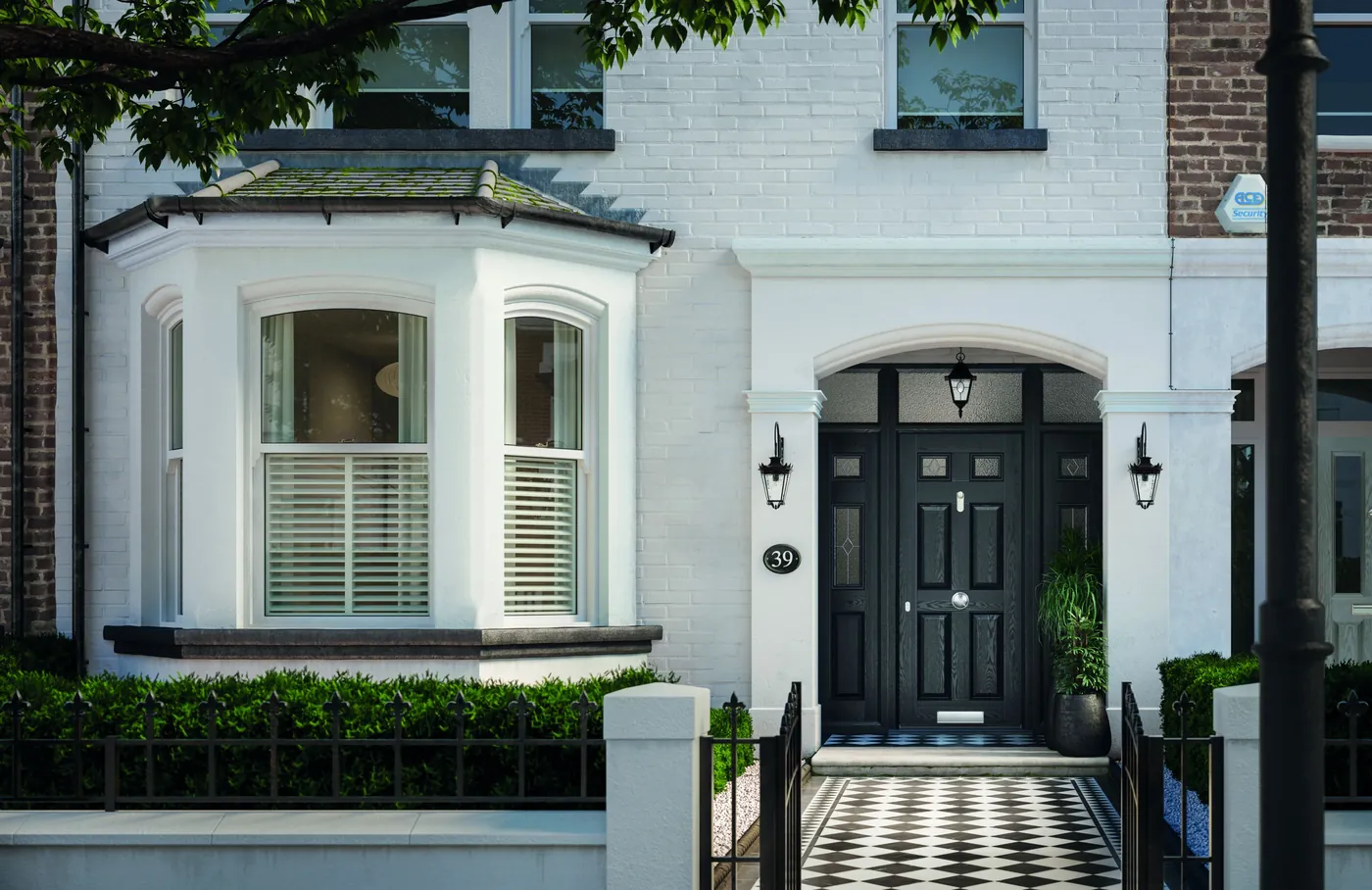
- Victorian (1837 to 1901): larger panes allowed two-over-two sashes, often with horns, and canted bay windows became common.
- Edwardian (1901 to 1910s): wider windows with small panes in the top sash and one large pane below; casements began to appear.
- 1920s and 1930s: bay windows, leaded lights and stained glass, plus steel-framed windows on Art Deco houses.
- Post-war and modern: casement windows, later tilt and turn, with clean lines and larger panes.
Key features
- Match the glazing bar pattern to the period of your home.
- Use sliding sash or flush casement windows for older homes.
- Choose casement or tilt and turn for modern homes.
- Keep the proportions of the original openings.
- Coordinate colours, handles and glass across the house.
Is it right for you?
Best suited to
- Restoring the look of a period home
- Replacing a mix of old windows
- Homes in conservation areas
- New builds wanting a traditional look
Things to consider
- Listed buildings usually need like-for-like timber
- Conservation areas may restrict changes to front windows
- Mixing styles on one elevation can look disjointed
- Budget: sash and timber windows cost more than casements
How to choose
- Match the architecture: follow the original style where you can.
- Think about the room: tilt and turn suits upstairs rooms; casements suit kitchens; obscure glass suits bathrooms.
- Plan ventilation: check how much of each window opens and whether trickle vents are needed.
- Set a budget: uPVC casements are the most affordable; timber sashes the most expensive.
See our guides to sash, flush casement, casement, tilt and turn and bay windows.
Every main type of window, by how it opens
| Type | How it opens | Best for |
|---|---|---|
| Casement | Side-hung or top-hung sashes open outwards | Most UK homes; the most popular and affordable |
| Flush casement | As a casement, with sashes sitting level with the frame | Cottages, period homes, conservation areas |
| Sliding sash | Two sashes slide up and down | Georgian, Victorian and Edwardian houses |
| Yorkshire (horizontal) sliding sash | Sashes slide sideways | Cottages and farmhouses, especially in the north |
| Tilt and turn | Tilts in at the top, or swings in like a door | Flats, upper floors, bedrooms and modern homes |
| Top-hung (awning) | Hinged at the top, pushes out from the bottom | Bathrooms and kitchens; airing when it rains |
| Bottom-hung (hopper) | Hinged at the bottom, the top tips inwards | Basements, toilets and high openings needing gentle airflow |
| Horizontal sliding | One pane slides sideways past another, like a small patio door | Kitchens behind a sink, servery hatches, modern homes |
| Parallel-action | The whole sash moves out a few centimetres, parallel to the frame | Modern and commercial buildings needing secure ventilation |
| Fixed or picture window | Does not open | Views, landings and large glazed walls |
| Transom or fanlight | Usually fixed, above a door or a larger window | Front doors and period hallways; often decorative glass |
| Reversible or pivot | Rotates so both sides can be cleaned from inside | High-rise flats and hard-to-reach windows |
| French or Juliet window | Pair of casements with no central post | Upstairs rooms with a Juliet balcony |
| Bay and bow | A group of windows projecting from the wall | Living rooms in period and 1930s homes |
| Shaped | Usually fixed, with arched, round or angled tops | Gables, period arches and feature openings |
| Roof and dormer windows | Centre-pivot or top-hung in the roof slope or a dormer | Loft conversions; see our roof lanterns and rooflights |
Variations to know: a sash window can be double-hung (both sashes slide, so it airs at the top and bottom), single-hung (only the lower sash slides), or a dummy sash (fixed, used to keep a matching look). Casements come as flush, where the sash sits level with the frame, or stormproof, where it overlaps the frame. A bow window is a curved group of four or more panes, while a bay has a flat front and angled or square sides. Windows are also often named by where they go, such as dormer, gable, balcony and roof windows.
Types of window frame material
| Material | Look | Upkeep | Typical lifespan | Relative cost |
|---|---|---|---|---|
| uPVC | Clean lines; woodgrain and colours available | Wipe clean | 20 to 35 years | Lowest |
| Aluminium | Slimmest frames, most glass | Wipe clean | 30 to 45 years | Medium to high |
| Timber | Most authentic, any colour | Repaint every 5 to 8 years | 40 to 60+ years if maintained | High |
| Alu-clad timber (composite) | Timber inside, aluminium outside | Low outside, timber care inside | 40 years or more | Highest |
| Steel and steel-look | Very slim black frames, factory style | Low | Long-lasting if coated well | High |
Glazing is a separate choice: double glazing is standard, with triple glazing for colder or noisier homes and secondary glazing where the original windows must stay.
Which type of window for each room
- Living room: large casements, a bay, or fixed panes with side openers to make the most of the view.
- Kitchen: casements or top-hung windows that clear the taps; avoid inward-opening sashes over a sink.
- Bathroom: top-hung or tilt and turn windows with obscure glass, for privacy and steady ventilation.
- Bedrooms: at least one window large enough for fire escape on upper floors, with child restrictors; tilt and turn works well.
- Loft rooms: roof windows or dormers with an escape-size opening.
- Landings and stairs: fixed or easy-clean windows, with safety glass where low or near the stairs.
More tips for choosing windows
- Follow the house, not the trend: a style or colour that suits the age of the building will still look right in 15 years; a passing fashion may not.
- Think about light and heat: larger glass and slimmer frames bring in more daylight. On south and west-facing walls, solar control glass can stop rooms overheating.
- Compare whole-life cost: a cheaper window that needs replacing sooner can cost more over 30 years than a better one. Look at the guarantee, upkeep and expected lifespan.
- Mix styles sensibly: keep the front of the house consistent; a modern extension can use a different style from the original house.
- Extensions and new builds: new windows in England must meet Approved Document L for energy and, on new homes, Approved Document Q for security against break-in. Wales, Scotland and Northern Ireland have their own equivalents, and your installer should confirm compliance.
- See it in person: look at real samples and, if you can, a finished house before choosing.
Regional window styles across the UK
Traditional windows vary across the four nations, and matching them matters most in older streets and conservation areas.
- Scotland: timber sash and case windows on tenements and villas, often with astragal bars; see our sash and case renovation guide.
- Northern England: Yorkshire sliding sashes on stone cottages, and sash windows on Victorian terraces.
- Wales: small-paned casements and sashes on slate-roofed cottages and terraces.
- Northern Ireland: sash windows on Georgian and Victorian town houses, with casements on rural cottages.
- London and the south: Georgian and Victorian sashes, and leaded casements and bays on 1930s suburbs.
Choosing the right type of window: a quick checklist
- Look at the house: its age, the original window style and the glazing bar pattern.
- Check the rules: listed building, conservation area, Article 4 direction or estate covenants.
- Think about each room: ventilation, cleaning, privacy and fire escape.
- Choose the material: uPVC, aluminium, timber or alu-clad, against your budget and upkeep.
- Pick colour and glass: see our window colours and glass options guides.
- Use a registered installer: FENSA or Certass, with an insurance-backed guarantee.
Styles compared
Typical fitted prices for the main window styles.
| Style | Typical price per window, fitted | Guide |
|---|---|---|
| uPVC casement | £350 – £600 | Casement windows |
| uPVC tilt and turn | £500 – £700 | Tilt and turn |
| uPVC sliding sash | £700 – £1,100 | Sash windows |
| Timber sliding sash | £1,500 – £2,000 | Sash windows |
| Bay window | £1,500 – £4,000 | Bay windows |
Standard-sized double-glazed windows. Prices are current indicative UK ranges from the published guides listed below. Always get a written quote.
Rules and regulations
- England and Wales: replacement windows must meet building regulations for energy, safety glass, ventilation and fire escape. In England that means a U-value of 1.4 W/m²K or a Window Energy Rating of band B or better. A FENSA or Certass installer can self-certify the work and give you a certificate.
- Scotland: replacing windows in a house of one or two storeys does not normally need a building warrant, but the windows must still meet the building standards. Flats and taller buildings may need one.
- Northern Ireland: replacement windows are controlled under the Building Regulations (Northern Ireland). Check with your council's building control service.
- Listed buildings and conservation areas: changing window style or material may need consent. Ask your council before ordering.
See the full guide to the rules for new windows and doors across the UK.
Found the right style?
Tell us what you are looking for and we will recommend the right design, frame and glass for your home. Our survey and quote are free, with no obligation.
Related guides
Sliding sash windows
Vertical sliding sashes for Georgian, Victorian and Edwardian homes.
Read the guideWindow stylesFlush casement windows
The look of traditional timber cottage windows.
Read the guideBuying guideReplacement windows
When to replace, repair or upgrade your windows.
Read the guideCommon questions
What type of window is cheapest?
uPVC casement windows are the most affordable, typically about £350 to £600 each fitted.
Can I mix window styles in my home?
Yes, but keep each elevation consistent. Many homes use sash windows at the front and casements at the back.
What windows suit a Victorian house?
Sliding sash windows, usually two over two, and canted bay windows. Flush casements can work on side and rear elevations.
What windows suit a 1930s house?
Bay windows with casements, often with leaded or stained glass in the top lights.
What are the main types of windows?
The main types are casement, flush casement, sliding sash, tilt and turn, top-hung, fixed, bay and bow, shaped, and roof or dormer windows.
What is the most popular type of window in the UK?
The casement window, usually in white or grey uPVC. It is affordable, secure, energy efficient and suits most homes.
What is the best type of window for a bathroom?
A top-hung or tilt and turn window with obscure glass gives privacy and good ventilation.
Which type of window is the most energy efficient?
Casement and tilt and turn windows usually perform best, because their sashes compress against the seals when closed. The glass and installation matter as much as the style.
What type of window frame lasts longest?
Well-maintained timber and aluminium frames usually outlast uPVC, often by 20 years or more, but uPVC needs the least care.
What is the difference between a bay and a bow window?
A bay window has a flat front with angled or square sides. A bow window is made of four or more panes set in a gentle curve. Both project from the wall.
What is the difference between single-hung and double-hung sash windows?
On a double-hung sash both sashes slide, so you can open the top and bottom for better airflow. On a single-hung sash only the lower sash moves.
What is a transom window?
A transom or fanlight is a window above a door or a larger window, usually fixed and often with decorative or stained glass.
What is an egress window?
An egress window is one large enough for escape in a fire: at least 0.33 m² of clear opening, at least 450 mm high and wide, with the bottom no more than 1,100 mm above the floor. Any opening style can meet this if it is big enough.
What is the difference between flush and stormproof casement windows?
On a flush casement the opening sash sits level with the frame for a traditional look. On a stormproof casement it overlaps the frame, which is cheaper and common on modern uPVC windows.
What windows suit a Georgian house?
Six-over-six sliding sash windows with slim glazing bars, ideally in timber, or high-quality uPVC where it is allowed.
If we have not answered your question here, please feel free to view our full FAQs or contact us directly.
Ready to plan your new room?
Get a ballpark price in under a minute with our estimator, or send us your project details for a free quote.