
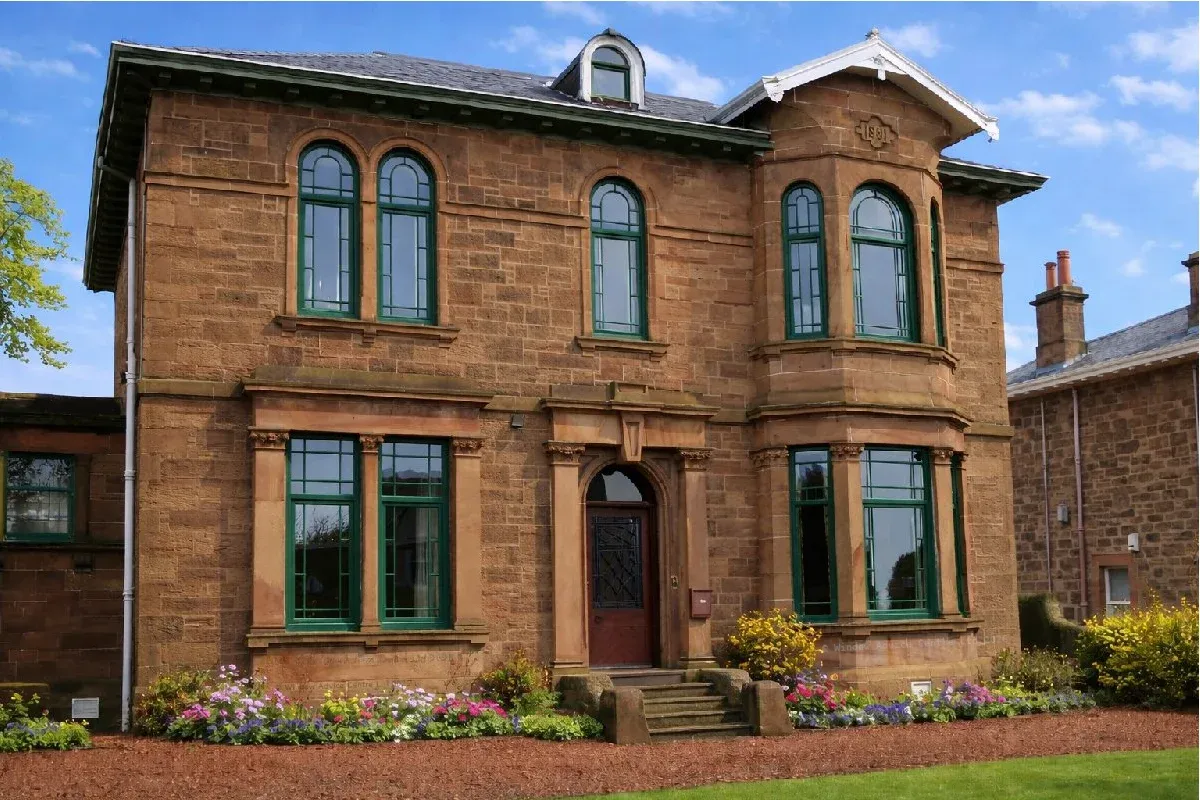
Window colours
Window colours: styles, prices and options
White is no longer the only choice. How to pick a frame colour that suits your home, from anthracite grey and black to woodgrain and heritage greens.
View styles and designs Get a free quote
Last updated: · By the Orangeries & Conservatories team
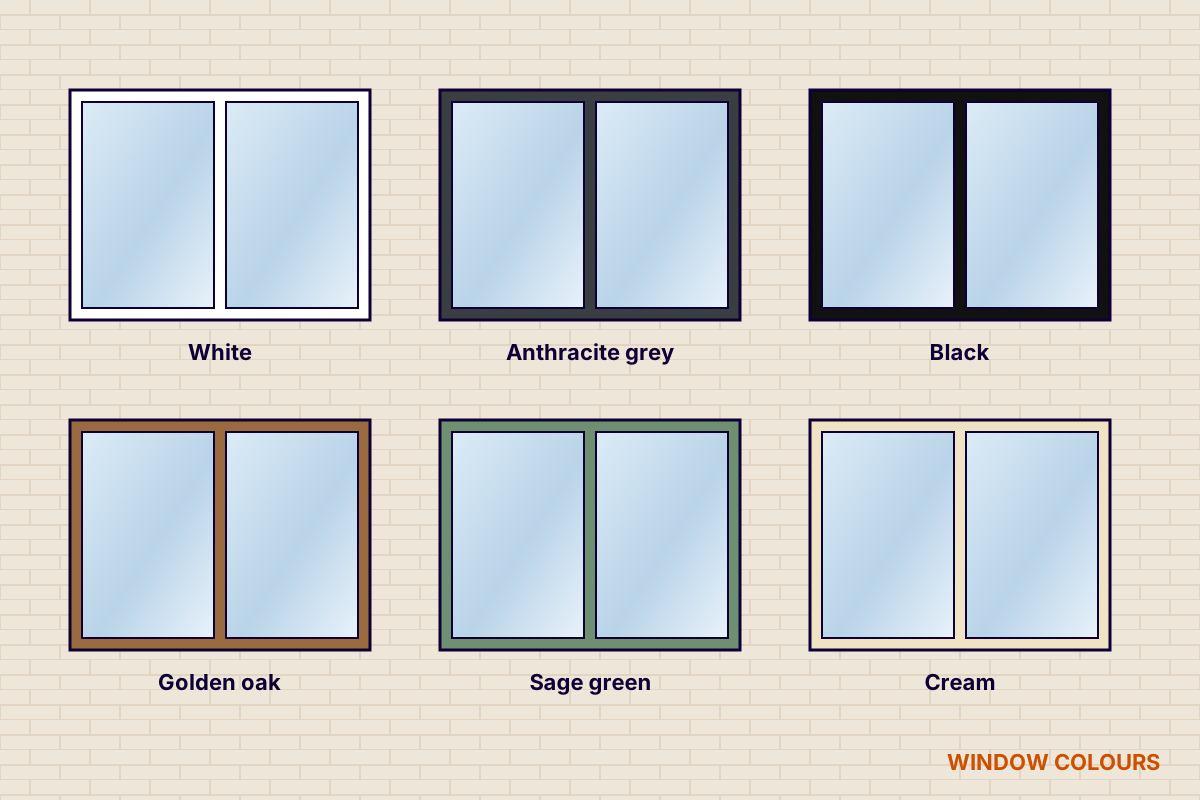
Popular window frame colours in the UK are white, anthracite grey, black, cream, woodgrain effects such as golden oak, and heritage greens. Most uPVC windows offer dual colour: a colour outside and white inside. Timber and aluminium windows can be finished in almost any RAL colour. Coloured uPVC usually costs more than white.
How to choose a window colour
Window frames cover a surprising amount of the front of a house, so their colour changes its whole character. Start with the colours you cannot change, such as the brick, render, stone and roof, then decide whether the windows should blend in or stand out.
White remains the most common choice and suits almost anything. Anthracite grey and black give a crisp, modern look and work especially well on render and new builds. Woodgrain finishes suit cottages and older brick homes, while cream and heritage greens suit period and rural properties. Choosing a coordinating front door colour pulls the look together.
Key features
- Dual colour: a colour outside and white inside.
- Woodgrain textures that imitate timber.
- Smooth finishes for a modern look.
- Any RAL colour on timber and aluminium.
- Matching door, conservatory and orangery frames.
Is it right for you?
Best suited to
- Anthracite grey or black: modern homes and render
- White: almost any house
- Woodgrain: cottages and older brick homes
- Cream and heritage greens: period and rural homes
Things to consider
- Coloured uPVC usually costs more than white
- Dark frames absorb more heat; check the guarantee
- Some conservation areas restrict frame colours
- See a physical sample in daylight before you order
Colours by material
- uPVC: a set range of foiled colours and woodgrains, usually with a dual-colour option. uPVC can be professionally sprayed in another colour later, but it is best to choose carefully at the start.
- Timber: painted or stained in almost any colour, and repainted when you want a change.
- Aluminium: powder coated in any RAL colour, often with different colours inside and out.
Handles and hinges come in white, chrome, gold, black and graphite, so you can match them to the frame or the rest of your home.
Popular window colours compared
| Colour | Look | Works best with |
|---|---|---|
| White | Clean, bright, timeless | Almost any home; the easiest to match later |
| Anthracite grey (RAL 7016) | Modern and crisp | White or grey render, buff brick, new builds and extensions |
| Black | Bold, steel-look | Render, stone, barn conversions, Crittall-style designs |
| Agate or light grey | Soft and understated | Cottages, stone and lighter brick |
| Cream | Warm and traditional | Period homes, stone and cottages |
| Chartwell or sage green | Heritage, country | Period, rural and conservation-area homes |
| Golden oak, Irish oak or rosewood woodgrain | Looks like natural timber | Red brick, cottages, Tudor-style homes |
| Black and white (Tudor split) | White sashes in a black outer frame | Black and white timbered and mock-Tudor houses |
| Grey woodgrain shades, such as grey cedar or slate | Textured, softer than smooth grey | Flush casements, barn conversions, coastal homes |
Colour names vary between manufacturers, so always choose from a physical sample rather than a screen.
How colour is applied, and smooth or woodgrain
| Material | How the colour is applied | What to know |
|---|---|---|
| uPVC (foiled) | A thin, tough coloured film is heat-bonded to the profile in the factory | Most common method; smooth or woodgrain textures; very durable |
| uPVC (sprayed) | Specialist paint sprayed onto the frames, in the factory or on site | Allows almost any RAL colour; check how the guarantee is affected |
| Aluminium | Powder coating baked onto the metal | Any RAL colour, matt, satin or gloss; woodgrain effects are possible |
| Timber | Factory-applied microporous paint or stain | Any colour, can be repainted later; recoat every few years |
Woodgrain finishes have a textured surface like painted or stained timber, which suits flush casements and period homes. Smooth finishes look crisper and closer to aluminium, which suits modern designs. Many grey and black shades come in both, so ask to see each.
Stock colours are the manufacturer's standard range and are quickest and cheapest. Special-order foils and RAL sprays are made to order, so they usually cost more and add a few weeks to the lead time.
Before you decide, look at similar homes in your street, and at your neighbours' windows, to see which colours suit the local style.
Matching your house, roof and door
- Red brick: white, cream, woodgrain and chartwell green blend well; anthracite grey gives a contemporary contrast.
- Buff or yellow brick and stone: grey, cream, sage and black all suit, as do white frames.
- White or pale render: anthracite grey and black give a sharp modern finish; light grey softens it.
- Roofline: fascias, soffits, gutters and downpipes in a matching or neutral colour finish the look. Black or anthracite gutters go with grey windows.
- Doors: the front door can match the windows or be a feature colour; see our front door colours guide.
- Whole house: changing the colour of only some windows rarely works well. Plan colour changes for the whole elevation at once.
Inside colours and dual colour
The colour inside matters as much as outside, because you see it every day. Most coloured uPVC windows are available white inside, which keeps rooms light and suits most decor. Others choose the same colour inside and out for a bold, consistent look, or woodgrain inside for warmth. Aluminium windows can be powder coated in any two RAL colours.
Heat, fading and care of coloured frames
- Heat: dark colours absorb more sunlight. Good systems use heat-reflective foils and reinforced profiles, so large dark frames are fine, but check the manufacturer's guidance for very large south-facing windows.
- Fading: quality foils and powder coatings are designed to resist fading for many years. Ask what the colour guarantee covers.
- Cleaning: warm soapy water and a soft cloth. Avoid abrasive pads and strong solvents, which can damage the finish.
- Repairs: small scratches on foiled uPVC can be touched up with a matching repair kit.
Colour rules in conservation areas
Changing window colour on an ordinary house does not normally need planning permission. In a conservation area with an Article 4 direction, on a listed building, or where a new-build estate has covenants, the colour may be restricted, often to white, cream or traditional painted timber. Check with your council or deeds before ordering coloured frames.
Coloured window prices
Colour is one of several factors in the price. Frame material makes the biggest difference.
| Frame | Typical price per window, fitted | Colour options |
|---|---|---|
| uPVC casement | £350 – £600 | White as standard; colours and woodgrains cost more |
| Aluminium casement | £400 – £1,000 | Any RAL colour, often dual colour |
| Timber casement | £600 – £1,200 | Painted or stained in almost any colour |
Standard-sized double-glazed casements. Prices are current indicative UK ranges from the published guides listed below. Always get a written quote.
Rules and regulations
- England and Wales: replacement windows must meet building regulations for energy, safety glass, ventilation and fire escape. In England that means a U-value of 1.4 W/m²K or a Window Energy Rating of band B or better. A FENSA or Certass installer can self-certify the work and give you a certificate.
- Scotland: replacing windows in a house of one or two storeys does not normally need a building warrant, but the windows must still meet the building standards. Flats and taller buildings may need one.
- Northern Ireland: replacement windows are controlled under the Building Regulations (Northern Ireland). Check with your council's building control service.
- Listed buildings and conservation areas: changing window style or material may need consent. Ask your council before ordering.
See the full guide to the rules for new windows and doors across the UK.
Window colours: styles and designs
Window colours in real homes: sage, chartwell and olive green, anthracite and agate grey, black and cream, on stone, brick and render. Tap any photo to see it larger.
Seen a style you like?
Tell us which designs caught your eye and we will help you choose the right style, frame, colour and glass for your home. Our survey and quote are free, with no obligation.
Related guides
Common questions
What is the most popular window colour?
White is still the most common, but anthracite grey has become the most popular alternative, followed by black and woodgrain finishes.
Are coloured uPVC windows more expensive?
Usually, yes. Coloured and woodgrain foils cost more than standard white uPVC.
Can you paint uPVC windows?
They can be professionally sprayed with specialist paint, but this may affect the guarantee. Choosing the right colour at the start is the better option.
What is a dual colour window?
A window with one colour on the outside, such as grey or green, and white on the inside to suit your rooms.
What colour windows go with red brick?
White, cream, woodgrain and chartwell green blend with red brick, while anthracite grey gives a modern contrast. Look at samples against your own brick in daylight.
Do grey windows go out of fashion?
Anthracite grey has been the most popular alternative to white for years and suits modern and many traditional homes. Softer greys and greens are also growing in popularity.
Do coloured windows fade?
Good-quality foils and powder coatings are made to resist fading for many years, and most come with a colour guarantee. Ask what it covers before you buy.
Can I have different colours inside and outside?
Yes. Most uPVC colours come with a white inside, and aluminium can be powder coated in a different colour on each side.
What colour windows add the most value?
Colours that suit the age and style of the house usually appeal to the most buyers. White, anthracite grey and heritage shades on period homes are safe choices; very bold colours can divide opinion.
How is colour applied to uPVC windows?
Usually as a coloured foil heat-bonded to the frame in the factory, in smooth or woodgrain textures. Frames can also be sprayed with specialist paint in almost any RAL colour.
Do special colours take longer?
Usually yes. Stock colours are quickest. Special-order foils and RAL sprays are made to order, which can add a few weeks and some cost.
Do I need permission to change my window colour?
Not normally. In a conservation area with an Article 4 direction, on a listed building or under estate covenants, colours may be restricted, so check first.
If we have not answered your question here, please feel free to view our full FAQs or contact us directly.
Ready to plan your new room?
Get a ballpark price in under a minute with our estimator, or send us your project details for a free quote.