
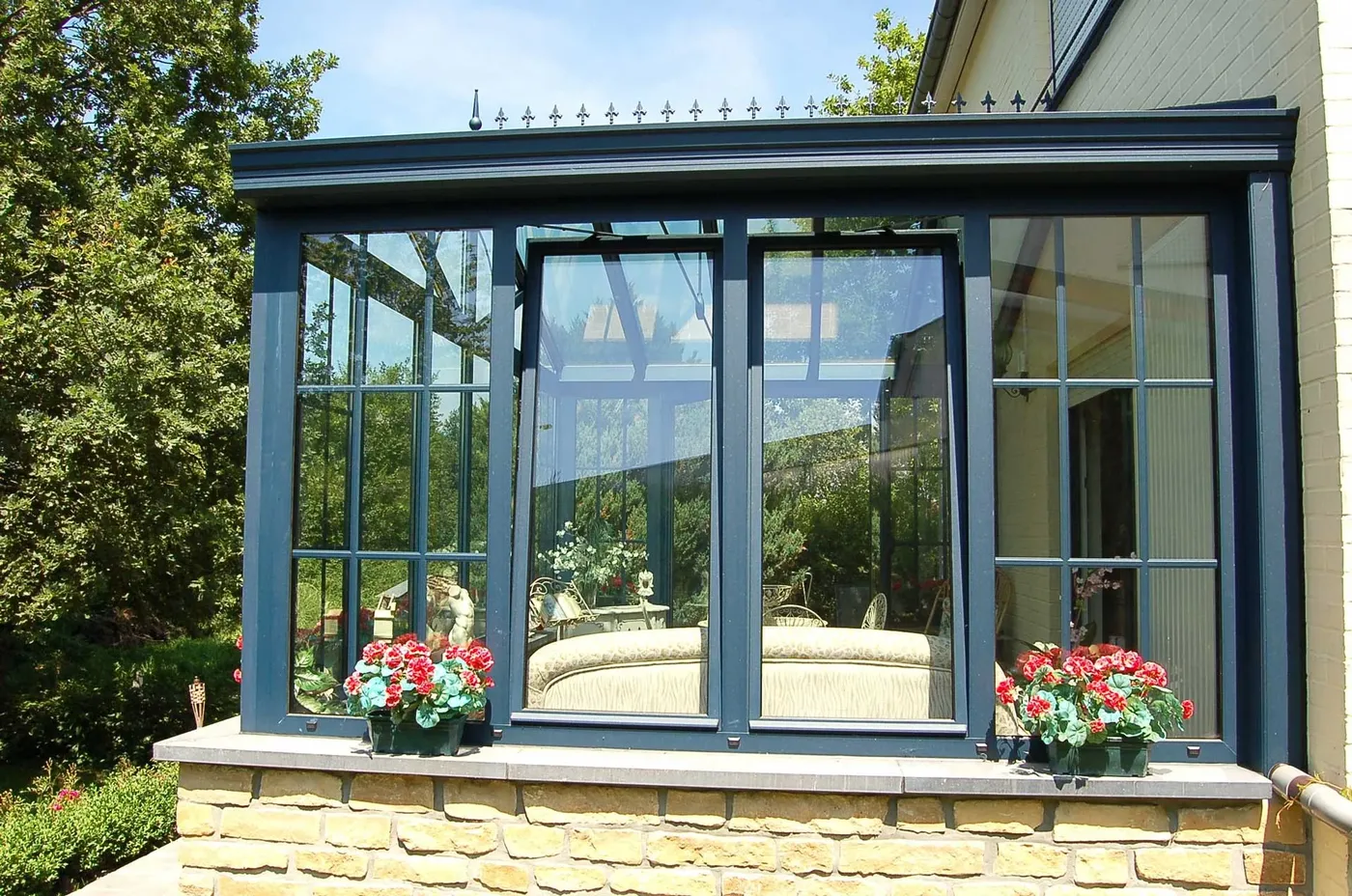
Tilt and turn windows
Tilt and turn windows: styles, prices and options
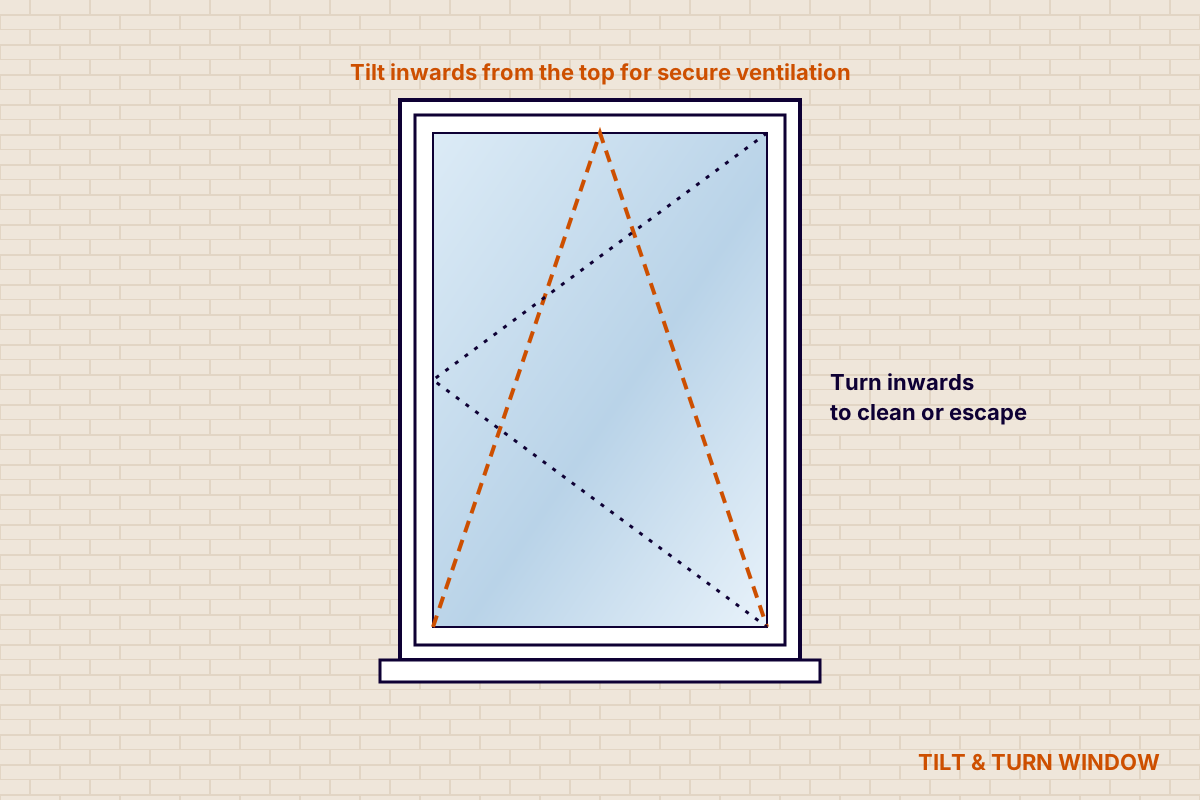
One handle, two ways to open: tilt the top inwards for secure ventilation, or turn the whole sash inwards for cleaning and escape.
View styles and designs Get a free quote
Last updated: · By the Orangeries & Conservatories team
A tilt and turn window opens two ways from one handle: turn it once and the sash tilts inwards from the top for secure ventilation; turn it again and the sash swings inwards on side hinges for cleaning or escape. Fitted uPVC tilt and turn windows typically cost about £500 to £700.
What is a tilt and turn window?
Tilt and turn windows are common across Europe and increasingly popular in the UK. The sash is hinged at both the bottom and the side. With the handle in one position the window tilts open a few centimetres at the top, letting air in while staying locked. In the second position it swings fully into the room.
Because they open inwards, nothing projects over paths or balconies, and both sides of the glass can be cleaned from inside, which makes them ideal for upstairs rooms, flats and hard-to-reach windows.
Key features
- Tilt position for secure, draught-free ventilation.
- Turn position for cleaning and a large escape opening.
- Opens inwards, so nothing projects outside.
- Multi-point locking around the whole sash.
- Large sashes and excellent seals for good energy ratings.
Is it right for you?
Best suited to
- Upstairs windows, flats and high-rise homes
- Rooms needing a fire escape window
- Bedrooms and nurseries needing secure ventilation
- Contemporary homes and extensions
Things to consider
- Usually around 25% more than a casement
- Inward-opening sashes need clear space inside
- Blinds and curtains must be planned around the sash
- Less traditional in appearance than casements or sashes
Frames and options
uPVC tilt and turn windows give the best value. Aluminium versions can be dual coloured, for example white inside and grey outside, in matt or gloss finishes. Timber and alu-clad timber tilt and turn windows give a warm natural finish inside, with an aluminium skin outside on alu-clad versions to cut maintenance. Timber triple-glazed sashes need a deeper frame, so decide on the glazing first.
Consider integral blinds between the glass panes, child-safety restrictors and tilt-first handles, which only allow the window to tilt until unlocked with a key.
How to use the handle
| Handle position | What the window does |
|---|---|
| Pointing down | Closed and locked all round |
| Pointing sideways | Turn: the sash swings into the room on its side hinges, like a door |
| Pointing up | Tilt: the top of the sash leans in by a few centimetres for ventilation |
Always close the window fully before moving the handle to a new position. Good systems have a misoperation device that stops the sash hanging from one hinge if the handle is turned while it is open. Some designs, called tilt-first, swap the order so the window tilts before it turns, which is safer in children's rooms.
How the mechanism works: the handle drives a set of gearing that runs round three edges of the sash and engages locking points in the frame. A hinge at the bottom corner and a stay arm at the top let the sash lean in for tilt, while hinges down one side let it swing open for turn. Because all of this hardware sits on the inside face of the frame, tilt and turn windows only open inwards.
Tilt and turn, casement or sash?
| Tilt and turn | Casement | Sliding sash | |
|---|---|---|---|
| Opens | Inwards | Outwards | Slides up and down |
| Cleaning outside glass | Easy from inside | Needs easy-clean hinges | Easy if the sashes tilt |
| Secure ventilation | Excellent in tilt | Good with a locking night vent | Good with sash stops |
| Fire escape opening | Very large | Large with egress hinges | Limited to half the window |
| Look | Modern, clean lines | Suits most homes | Period homes |
| Typical uPVC price | £500 – £700 | £350 – £600 | £700 – £1,100 |
Where tilt and turn windows work best
The tilt position is the one you will use every day. Air comes in at the top, above head height, so a room can be aired for hours without a cold draught at floor level, which also helps clear the moisture that causes condensation in bathrooms, kitchens and bedrooms.
- Flats and upper floors: every pane can be cleaned from inside, and nothing swings out over walkways or balconies.
- Bedrooms and nurseries: the tilt position gives fresh air overnight while the window stays locked.
- Loft conversions and dormers: a wide turn opening makes a practical escape window.
- Large windows: tilt and turn sashes can be bigger than casements, which suits modern extensions and floor-to-ceiling glazing. Tilt and turn doors and tilt and slide patio doors work in the same way.
Plan for the sash swinging into the room. Keep the sill clear, check it will not hit a tap if fitted over a kitchen sink, and choose blinds that sit within the sash, are fixed to it, or are integral blinds sealed between the panes.
Blinds for tilt and turn windows
Because the sash swings into the room, a blind fixed to the wall or the top of the recess will get in the way. The best options move with the window:
- Perfect fit blinds clip into the glazing bead of the sash with no drilling, so they tilt and turn with the window. Pleated, roller, Venetian and blackout styles are available.
- Sash-mounted blinds are screwed to the top of the sash itself and held at the bottom with tension wires or clips.
- Integral blinds sit sealed between the panes of glass, never need cleaning and are operated with a magnetic slider. They must be ordered with the window.
- Curtains: use a pole wide enough for the curtains to clear the sash fully when they are open.
Avoid blinds with loose cords in children's rooms, and ask us about integral blinds when you order, as they cannot be added later.
Pros and cons of tilt and turn windows
Advantages
- Secure ventilation in the tilt position, even when you are out of the room
- Both sides of the glass cleaned safely from inside
- A large, clear opening for fire escape
- Nothing projects over paths, balconies or walkways
- Excellent seals and energy ratings, with triple glazing available
Disadvantages
- Usually about 25% dearer than a casement of the same size
- The sash needs clear space inside, so plan blinds, curtains and sills
- Slightly wider frames to hold the mechanism
- More hardware to look after, and the handle must be used correctly
- A modern look that does not suit every period home
Common problems and how to fix them
| Problem | Likely cause | What to do |
|---|---|---|
| Sash hanging from one hinge | The handle was moved while the window was open | Support the sash, push it back against the frame at the top, return the handle to the turn position, then close it |
| Sash catches or drags on the frame | The sash has dropped slightly over time | The hinges can be adjusted with an Allen key; an installer can do this in minutes |
| Stiff handle or will not lock | Dry gearing, or the locking points are out of line with the keeps | Oil the locking points; if it persists, have the keeps adjusted rather than forcing the handle |
| Draught or whistling | Worn seals or the sash not pulling in tight | Clean or replace the seals and adjust the locking cams |
| Condensation on the glass | High humidity indoors | Use the tilt position for regular airing and keep trickle vents open |
Most adjustments are quick, but tilt and turn sashes are heavy and the hardware is under tension, so if you are unsure, ask your installer rather than taking parts off.
Safety, security and fire escape
- Locking: locking points run all the way round the sash, and the window stays locked in the tilt position. Look for windows tested to PAS 24.
- Children: key-locking handles, tilt-first hardware and restrictors stop the window being turned fully open.
- Low sills: on upper floors, a window with a sill lower than about 800 mm above the floor usually needs guarding or restrictors under building regulations.
- Fire escape: fully turned, a tilt and turn window gives a large, clear opening that easily meets the minimum of 0.33 m², at least 450 mm high and wide.
- Glass: toughened or laminated glass where required, with triple glazing available on most systems.
Looking after tilt and turn windows
Tilt and turn hardware has more moving parts than a casement, so a little care keeps it working smoothly. Once a year, wipe the frame and seals, put a drop of light oil on the hinges and locking points, and check the sash closes evenly. If a sash starts to catch or drop, an installer can adjust the hinges in a few minutes; do not force the handle.
Tilt and turn window prices
Tilt and turn windows cost more than casements because of their more complex hinges and locking.
| Frame | Typical price per window, fitted | Notes |
|---|---|---|
| uPVC | £500 – £700 | Best value |
| Aluminium | £750 – £1,000 | Slimmer frames, dual colour options |
| Timber | £900 – £1,200 | High-specification homes |
Standard-sized double-glazed windows, supplied and fitted. Prices are current indicative UK ranges from the published guides listed below. Always get a written quote.
Rules and regulations
- England and Wales: replacement windows must meet building regulations for energy, safety glass, ventilation and fire escape. In England that means a U-value of 1.4 W/m²K or a Window Energy Rating of band B or better. A FENSA or Certass installer can self-certify the work and give you a certificate.
- Scotland: replacing windows in a house of one or two storeys does not normally need a building warrant, but the windows must still meet the building standards. Flats and taller buildings may need one.
- Northern Ireland: replacement windows are controlled under the Building Regulations (Northern Ireland). Check with your council's building control service.
- Listed buildings and conservation areas: changing window style or material may need consent. Ask your council before ordering.
See the full guide to the rules for new windows and doors across the UK.
Tilt and turn windows: styles and designs
Tilt and turn windows in white, grey, black and blue, shown closed, tilted and turned open, in bedrooms, kitchens, garden rooms and modern extensions. Tap any photo to see it larger.
Seen a style you like?
Tell us which designs caught your eye and we will help you choose the right style, frame, colour and glass for your home. Our survey and quote are free, with no obligation.
Related guides
Common questions
How does a tilt and turn window work?
Turn the handle to one position and the sash tilts inwards at the top for ventilation. Turn it further and the sash swings inwards on side hinges like a door.
How much do tilt and turn windows cost?
Fitted uPVC tilt and turn windows typically cost about £500 to £700 each, around 25% more than a casement.
Are tilt and turn windows good for fire escape?
Yes. When fully turned they give a large, clear opening, which is why they are popular upstairs and in flats.
Are tilt and turn windows secure in the tilt position?
Yes. In the tilt position the window remains locked and only opens a small gap at the top.
Which way does the handle go on a tilt and turn window?
On most windows, handle down is locked, handle sideways turns the sash open like a door, and handle up tilts the top inwards. Always close the window before moving the handle to a new position.
Can I fit blinds to tilt and turn windows?
Yes. Choose blinds fixed to the sash or sitting within it so they move with the window, or integral blinds sealed between the panes of glass.
Are tilt and turn windows suitable for kitchens?
Yes, but check the sash will clear the taps if the window is over a sink. A fixed pane with a tilt and turn sash to one side is often the best layout.
Are tilt and turn windows safe for children?
Yes, with key-locking handles, restrictors or tilt-first hardware that only allows the window to tilt until it is unlocked with a key.
Do tilt and turn windows need maintenance?
Very little. Clean the seals and oil the hinges and locking points once a year. If the sash catches or drops, the hinges can be adjusted quickly.
Can tilt and turn windows be triple glazed?
Yes. Most systems take triple glazing, and their compression seals and large sashes make them some of the most energy-efficient windows available.
Do tilt and turn windows open outwards?
No. Tilt and turn windows only open inwards, because the hinges and gearing sit on the inside face of the frame. If you need an outward-opening window, choose a casement.
What are the disadvantages of tilt and turn windows?
They cost more than casements, the sash needs clear space inside the room, the frames are slightly wider, and blinds and curtains need to be planned around the opening sash.
What blinds are best for tilt and turn windows?
Blinds that move with the sash: perfect fit blinds that clip into the glazing bead, blinds fixed to the sash itself, or integral blinds sealed between the panes, which must be ordered with the window.
How do I adjust a tilt and turn window?
The hinges and locking keeps can be adjusted with an Allen key to stop the sash catching or to tighten the seal. Because the sash is heavy and the hardware is under tension, it is safest to ask your installer.
How big can a tilt and turn window be?
It depends on the frame system and the weight of the glass. uPVC sashes can be close to door size, and aluminium systems can go larger. Your installer will check the size against the hardware limits at the survey.
Can I get tilt and turn doors?
Yes. Tilt and turn doors work in the same way as the windows and are popular for balconies and Juliet balconies. Tilt and slide patio doors use a similar idea on a sliding door.
If we have not answered your question here, please feel free to view our full FAQs or contact us directly.

Ready to plan your new room?
Get a ballpark price in under a minute with our estimator, or send us your project details for a free quote.