
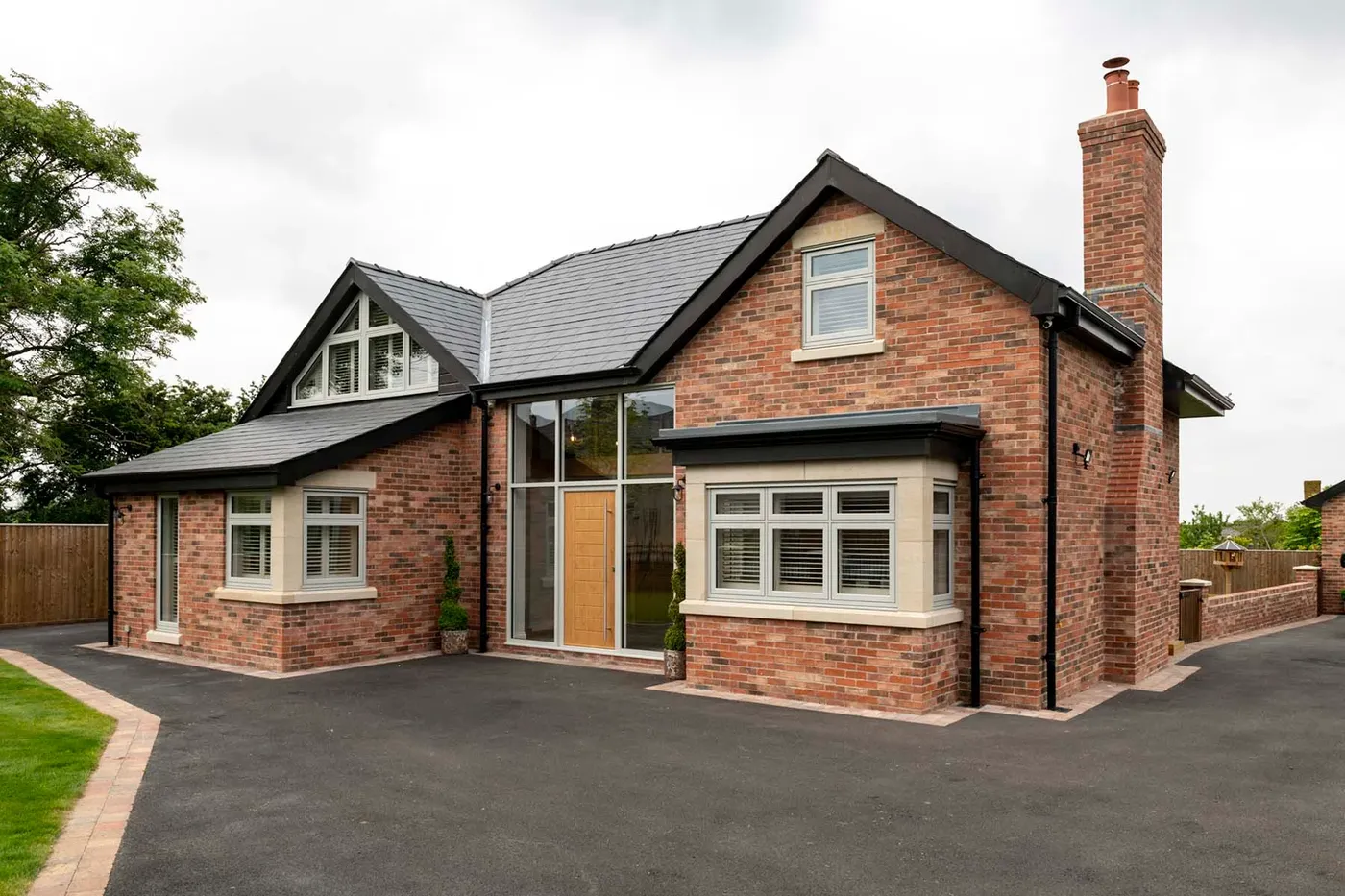
Flush casement windows
Flush casement windows: styles, prices and options
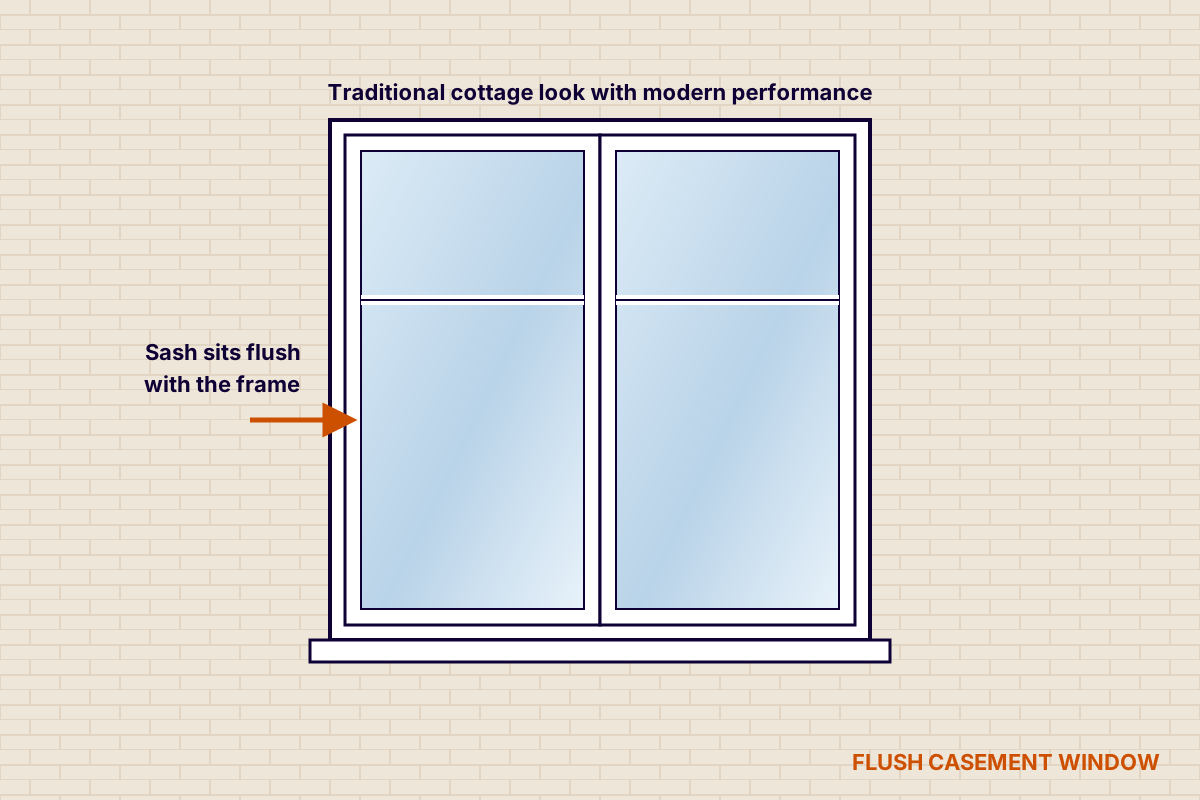
Sashes that sit perfectly level with the frame, recreating the clean lines of traditional timber windows with modern performance.
View styles and designs Get a free quote
Last updated: · By the Orangeries & Conservatories team
A flush casement window is a casement whose opening sashes sit level with the outer frame instead of overlapping it. It recreates the look of traditional timber cottage windows, suits period and modern homes, and typically costs a little more than a standard casement, about £300 to £750 fitted in uPVC.
What is a flush casement window?
Before modern storm-proof windows, most British timber casements were made with the sash sitting flush inside the frame. Flush casement windows bring that look back. From outside, fixed and opening panes look almost identical, giving a balanced, symmetrical appearance.
Today they are made in uPVC with timber-style welded corners, in slim aluminium and in engineered timber, all with modern double or triple glazing, multi-point locks and easy-clean hinges.
Key features
- Sashes sit flush with the frame, inside and out.
- Equal sightlines, so fixed and opening panes look the same.
- Timber-style details such as mechanical joints, run-through sash horns and astragal bars.
- Modern glazing, seals and multi-point locking.
- Available in uPVC, aluminium and timber, in heritage colours and woodgrains.
Is it right for you?
Best suited to
- Cottages, period and character properties
- Homes in conservation areas where appearance matters
- Modern homes wanting a crisp, minimal look
- Replacing old timber windows like for like in appearance
Things to consider
- Usually costs more than a standard storm-proof casement
- Check what your planning authority will accept on listed buildings
- Fewer budget options than standard casements
- Hardware and bar choices affect the final look a great deal
Frames and finishes
uPVC flush casements are the best value and come in woodgrain, heritage greens, greys and creams. Timber gives the most authentic finish and is often expected on listed buildings. Aluminium flush windows suit contemporary homes with slim black or grey frames.
Choose astragal or Georgian bars to match the original pattern of your windows, and traditional monkey-tail or pear-drop handles for a period look.
Flush or standard casement?
Both are hinged casement windows with the same locks, glazing and energy ratings. The difference is how the opening sash sits in the frame, which changes the look far more than the performance.
| Flush casement | Standard (storm-proof) casement | |
|---|---|---|
| How the sash sits | Level with the outer frame | Overlaps the frame by a few millimetres |
| Look | Slim, even sightlines, like traditional timber windows | Chunkier, with opening panes that look different from fixed ones |
| Best for | Cottages, period homes, conservation areas, crisp modern designs | Most 1930s to modern homes on a tighter budget |
| Typical uPVC price | About £300 to £750 per window | About £350 to £600 per window |
| Energy and security | The same: A-rated glazing and PAS 24 locks are available on both | |
If budget is the main concern, a standard casement gives the same comfort for less. If the look of the house matters, flush sashes are usually worth the extra.
Finishes and period details
- Colours: white, cream, heritage green, chartwell green, anthracite grey, black and woodgrain foils. Many can be one colour outside and white or woodgrain inside. See our window colours guide.
- Joints: mechanical or welded-to-look-mechanical corners mimic the joinery of a timber window.
- Sash horns: small projections at the bottom of the frame that recreate a traditional detail.
- Bars: astragal bars stuck to the glass inside and out look like true small panes; internal bars between the glass are cheaper and easy to clean.
- Handles and stays: monkey-tail or pear-drop handles and peg stays in chrome, black, brass or pewter finishes.
- Glass: standard double glazing, triple glazing, or slim heritage units where the frames must stay thin.
- Layouts: flush sashes work in single windows, bay windows, French casements with no central post, and tall floor-to-ceiling windows.
Glass, noise and energy
Flush casements take the same sealed glass units as standard casements, so you can choose the glass to suit each room.
- Double glazing with low-E glass and warm-edge spacers is standard and reaches a Window Energy Rating of A on most systems.
- Triple glazing brings the U-value down to around 0.8 to 1.0 W/m²K, which helps on cold, exposed or north-facing walls. See our triple glazing guide.
- Acoustic glass uses a laminated pane with a sound-damping layer, which cuts traffic and aircraft noise far more than extra panes alone.
- Different glass in each pane: obscure glass in a bathroom, toughened glass in low panes, and clear or leaded-effect glass elsewhere, all in the same window.
The flush design itself does not make a window warmer or quieter. The glass, the seals and the quality of the fitting make the difference.
Lead times, fitting and guarantees
Flush casements are made to measure after a survey. Lead times are usually 6 to 12 weeks from order, and longer for timber, dual colours or busy times of year.
Fitting a single window takes a few hours. Most houses are done in 1 to 3 days, with each window replaced in turn so the house is never left open overnight.
Before you sign, check:
- the installer is registered with FENSA or Certass, or will arrange building control approval, so you receive a certificate
- how long the frame, the glass units and the moving parts are each guaranteed for
- that the guarantee is insurance-backed, so it stays valid if the company stops trading
- whether your deposit is protected
Our guide to choosing a window installer has more detail.
Conservation areas and listed buildings
In most homes, replacing windows with ones of a similar appearance is permitted development in England and does not need planning permission. Different rules can apply in a conservation area, and some councils have an Article 4 direction that removes these rights, especially on front elevations.
Because flush casements closely copy traditional timber windows, they are often the most acceptable choice where appearance matters. Some councils still insist on timber, so check before you order.
On a listed building, any change to the windows needs listed building consent, and the council will usually expect repair or like-for-like timber replacement. In these cases, secondary glazing can improve warmth without touching the original windows. The rules are similar in Scotland, Wales and Northern Ireland, so always speak to your local planning office first.
Flush casement window prices
Flush casements typically cost a little more than standard casements because of the extra detailing.
| Window | Typical price, fitted | Notes |
|---|---|---|
| uPVC, small (about 600 × 900 mm) | Around £300 – £400 | Single opening sash |
| uPVC, medium (about 1,200 × 1,200 mm) | Around £450 – £550 | Most common size |
| uPVC, large (about 940 × 1,600 mm) | Around £470 – £570 | Tall window |
| Aluminium flush casement | Around £600 – £1,100 | Slim frames, often black or grey |
| Timber flush casement | £950 – £1,400 | Heritage timber at the upper end |
Single windows, supplied and fitted. Prices are current indicative UK ranges from the published guides listed below. Always get a written quote.
Rules and regulations
- England and Wales: replacement windows must meet building regulations for energy, safety glass, ventilation and fire escape. In England that means a U-value of 1.4 W/m²K or a Window Energy Rating of band B or better. A FENSA or Certass installer can self-certify the work and give you a certificate.
- Scotland: replacing windows in a house of one or two storeys does not normally need a building warrant, but the windows must still meet the building standards. Flats and taller buildings may need one.
- Northern Ireland: replacement windows are controlled under the Building Regulations (Northern Ireland). Check with your council's building control service.
- Listed buildings and conservation areas: changing window style or material may need consent. Ask your council before ordering.
See the full guide to the rules for new windows and doors across the UK.
Flush casement windows: styles and designs
Flush casement windows in black, anthracite grey, cream, sage green, light grey and white, on new builds, stone cottages and period homes. Tap any photo to see it larger.
Seen a style you like?
Tell us which designs caught your eye and we will help you choose the right style, frame, colour and glass for your home. Our survey and quote are free, with no obligation.
Related guides
Casement windows
The UK's most popular window, hinged at the side or top.
Read the guideWindow stylesSliding sash windows
Vertical sliding sashes for Georgian, Victorian and Edwardian homes.
Read the guideGlazing optionsSecondary glazing
An extra inner pane for listed homes and noisy roads.
Read the guideCommon questions
What is a flush casement window?
A flush casement window has opening sashes that sit level with the outer frame instead of overlapping it, recreating the look of traditional timber windows.
Are flush casement windows more expensive?
Usually a little. A uPVC flush casement typically costs about £300 to £750 fitted depending on size, aluminium about £600 to £1,100 and timber about £950 to £1,400.
What is the difference between flush and standard casement windows?
On a standard storm-proof casement the opening sash overlaps the frame. On a flush casement it sits level with the frame, so fixed and opening panes look the same. Locks, glazing and energy ratings are the same on both.
Are flush casement windows energy efficient?
Yes. They use the same double or triple glazing and seals as standard casements, and most reach a Window Energy Rating of A.
Are flush casement windows secure?
Yes. They have multi-point locks, shoot bolts and locking handles. Look for windows tested to PAS 24 or approved under Secured by Design.
Are flush casement windows suitable for new builds?
Yes. Their clean, symmetrical lines suit modern homes as well as cottages and period properties, especially in grey or black.
Can I fit flush casement windows in a conservation area?
Often, as they closely match traditional windows, but rules vary and some councils require timber. Listed buildings need listed building consent, so check with your council first.
Can flush casement windows have Georgian bars?
Yes. Astragal bars fixed to the glass inside and out give the most authentic small-pane look, while bars between the glass are cheaper and easier to clean.
Are flush casement windows quieter than standard casements?
Not by design alone. Noise reduction comes from the glass and seals, so for a busy road choose acoustic laminated glass or triple glazing, which work in flush and standard casements alike.
Can I have different glass in each pane of a flush casement window?
Yes. Each pane is a separate sealed unit, so you can mix clear, obscure, toughened and leaded-effect glass in one window.
How long does it take to fit flush casement windows?
After a survey, the windows are usually made in 6 to 12 weeks. Fitting takes a few hours per window, and most houses are finished in 1 to 3 days.
Can flush casement windows be fitted in a bay?
Yes. Flush sashes can be made for bay and bow windows, French casements and tall floor-to-ceiling windows, giving the same even sightlines throughout.
If we have not answered your question here, please feel free to view our full FAQs or contact us directly.
Ready to plan your new room?
Get a ballpark price in under a minute with our estimator, or send us your project details for a free quote.